Human Connection in the Age of AI: Why It’s More Important than Ever

In our fast-paced, technology-driven world, it can be easy to lose sight of the deeper and more meaningful aspects of life. We can get caught up in the pursuit of achievement, chasing after the latest trends and fads, and forget about the importance of having a personal connection to the work we do. Or, on the other hand, we may get complacent and comfortable in repeating what we’ve always done in the name of consistent success. However, as this week’s podcast guest alludes to, discovering the soul of an idea and having a personal connection to one’s work is crucial for lasting success.

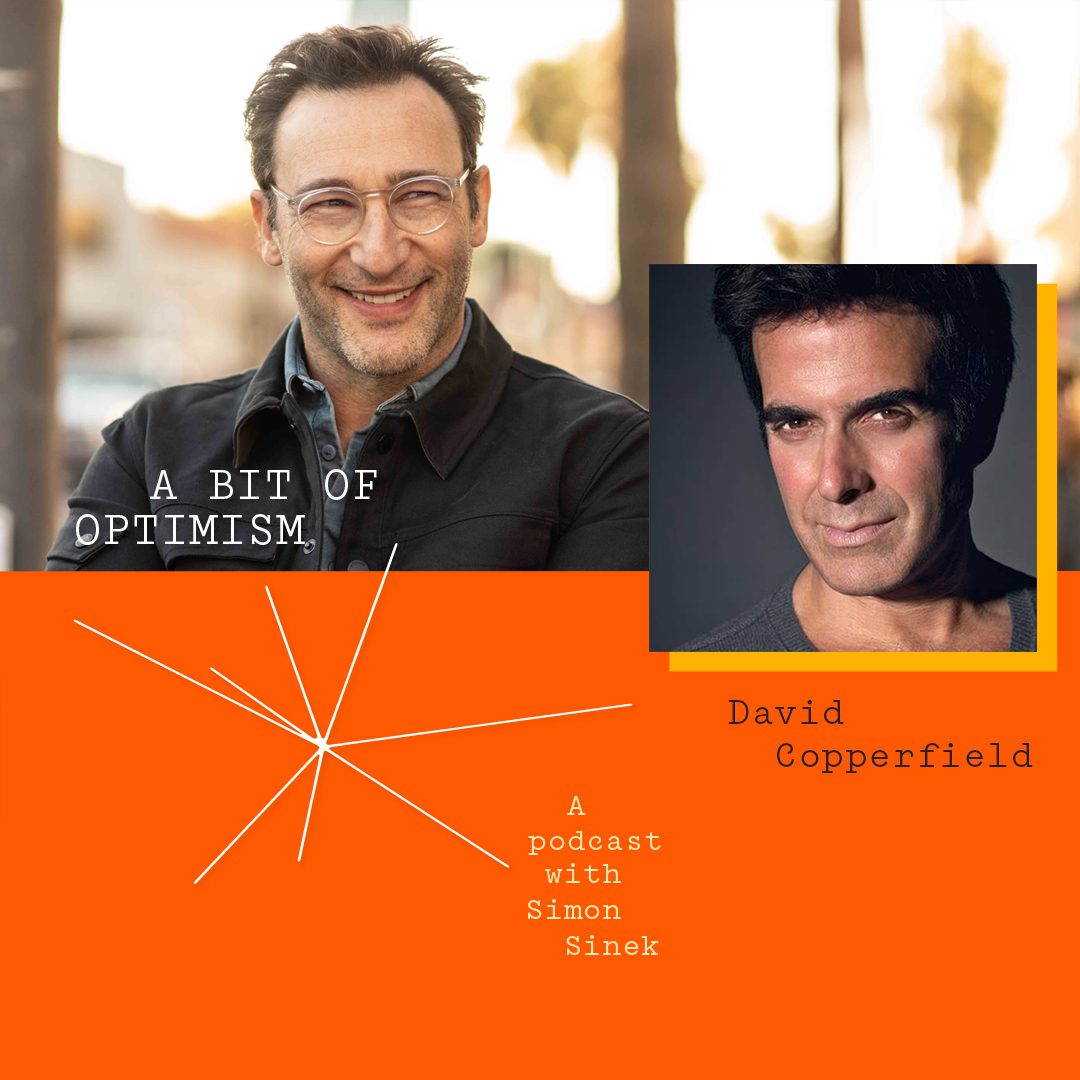
What is the “soul” of an idea? As David Copperfield says,

Then it's conveying the message, the story, the feeling, the emotion. That's what's interesting. It connects. If people in the audience are amazed and cry, then it's interesting. If the people in their hearts are amazed and are inspired, then it's interesting.

This personal connection can stem from various sources, such as a strong belief in the mission or a passion for the work. When we have this connection, we are more likely to be committed and persistent in our pursuit of success.

Having a strong tie to one’s work can also lead to a greater sense of fulfillment and purpose. When we feel that our work is meaningful and aligned with our values and beliefs, it can provide a sense of satisfaction and joy that goes beyond just monetary success.

But how can we cultivate this personal connection and soul in our work? One way is to question why we are doing what we are doing. Are we just following the latest trends, or do we have a genuine interest in the work? Are we doing it just for the paycheck, or do we feel that it aligns with our values and passions?

Another way is to seek feedback from others and question their opinions. David often films his illusions and reviews them with other people to continuously improve them and get their feedback. By understanding why people like something or are drawn to it, we can gain insight into the qualities that make it meaningful and significant. This can help us create work that resonates with people on a deeper level and has a lasting impact.

In addition to these strategies, it’s also important to remember that this kind of connection is not something that happens overnight. It takes time, dedication, and persistence to cultivate this connection and create work that truly matters.

This idea of soul is a word that I've never really used. I love it because I think it helps explain something ethereal as to why you should commit to something and why you should be stubborn to try and figure it out…Because it matters. And to have personal connection to the work that we do is what distinguishes a long career like yours, a 40-plus year career like yours, versus somebody who may have short term success. And the lasting success is you've got to really believe in the things you're doing. You have to have a visceral, emotional connection, otherwise it's not worth committing the energy to. I've learned that from you. And the other thing that I've learned is the desire to really understand why people like things, not because you're testing them. It's because you want to find out what you're missing or where there's something you can learn and to question people's opinions about things for growth. I think it's something I wish we would all do.

Listen to his full conversation with David:

If you have a story about someone you know inspiring people to help others or how Simon’s work has inspired you, send it to us at [email protected], and we might share it here!

3 Tips to Beat Burnout at Work

Are you struggling with burnout at work?

According to a recent poll we conducted on our company LinkedIn page, you’re not alone. Burnout has become a huge pain point for professionals, affecting productivity and well-being. But don’t worry, our Optimist Instructors have shared some practical tips and classes to help you overcome burnout. Keep reading to learn more.

3 Tips from our Optimist Instructors:

Encourage Taking Breaks 

Remind your team to take short breaks throughout the day to rest their mind and recharge their energy. This could mean taking a walk, practicing deep breathing, or just stepping away from your computer for a few minutes.

Tell Your Team They Matter  

Feeling significant is a crucial ingredient for mental health. An action you can take right now to improve others' well-being is to ensure people know how they matter to you. Ask your people: "When do you feel like you matter here?" Ask yourself: "Do I make sure people around me feel noticed, affirmed, and needed every day? What practices do I enact to ensure the repeated experience of mattering? Committing to noticing, affirming, and showing people how they're needed is something you can start today and it can have an incredible effect on your organization and on people's lives.

Give Space to Unwind and Have Fun

Empower your team to find time to connect and play a game. Chess, checkers, cards, basketball, golf, or even any video game. It will help you laugh, relax, and connect with others.

Interested in learning opportunities for your whole company? We’ve got you!

3 Classes to Watch in The Optimism Library 

Reduce Your Stress and Anxiety 

Build your emotional resilience to better cope with stress and anxiety and lead a happier life.

Conquer Overwhelm and Boost Productivity 

Think clearer, breathe easier, and increase your productivity to feel more joyful—every single day.

Stop Self-Sabotage and Achieve Lasting Success

Find your triggers, modify your thoughts, and unlock your motivation to stop this vicious cycle in its tracks.

 …and there’s more where that came from! Subscribe to The Optimism Library for over 40 of our very best class recordings, with more added every month and online access everywhere.

Advice from Simon on how to beat burnout: 

May might be Mental Health Awareness Month, but your mental health should be a priority everyday.

By implementing these practical tips and taking our recommended classes, you can say goodbye to burnout and increase your productivity at work. Remember, burnout is preventable, and taking care of yourself is crucial to your well-being and success.

Take care of yourself, and take care of each other! 

Strength through Resilience and Accountability

Resilience and accountability go hand in hand. In order to bounce back from adversity, we need to be willing to take responsibility for our actions. We need to acknowledge the mistakes we’ve made and the damage we’ve caused. But we also need to have the strength to keep going, even when things seem impossible. We need to be able to pick ourselves up and move forward—no matter what.

Of course, this is easier said than done. It can be incredibly difficult to take accountability for our actions, especially when those actions have caused harm to others. It can also be challenging to stay resilient in the face of adversity, especially when the odds are stacked against us. But as this week’s podcast guest shows, it is possible.

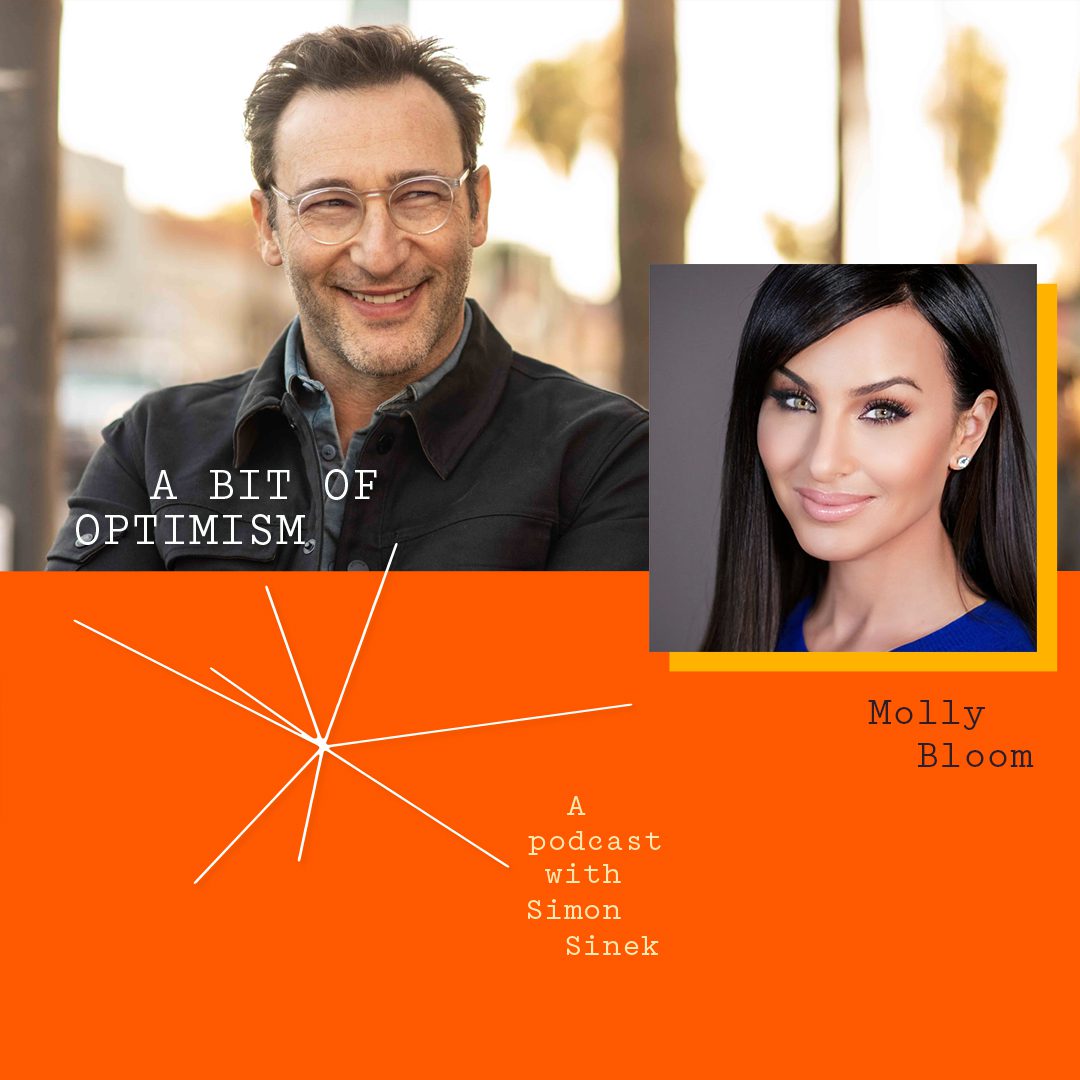
Molly Bloom, the real-life titular character of the Oscar-nominated film Molly’s Game, shares her unconventional journey through the highest of highs and lowest of lows in her life.

Her story began with the dream of becoming an Olympic skier. When a devastating injury put an end to that dream, Molly was forced to find a new path in life. But as her success grew, so did the risks. Molly soon found herself mixed up in a world of drugs, violence, and corruption. And when the FBI finally caught her, she was forced to confront the consequences of her actions.

Throughout it all, Molly Bloom demonstrated a remarkable level of resilience. Despite the many obstacles she faced, she never gave up. And even when things seemed impossible, she found a way to keep going. That’s evident in the way she handled her arrest, her trial, and her time in prison. Despite the many challenges, she never lost hope or succumbed to despair.

At the same time, she also took full accountability for her actions. She acknowledged the mistakes she made and the harm she caused to others. She didn’t make excuses or try to shift the blame onto anyone else. Instead, she assumed responsibility and worked to make amends.

I had this experience of what it feels like when I acted not in alignment with what I believe in and who I am. And I– I hated myself and I didn't want to fight for myself anymore. And this, like, almost delusional confidence that I'd always had was gone…I had been in that place and I'd come out of that place. I had done all this work. I had a very strong sense of pride that these were my choices and I was going to stand for them. I needed to take accountability.

This combination of resilience and accountability is ultimately what allowed Molly to rebuild her life. Her rise, fall, and subsequent restoration are powerful examples of how these two concepts can shape our lives and our experiences. She may have lost everything she had, but she didn’t let that defeat her. Instead, her experience was a catalyst for personal growth and self-reflection, and today she shares her story around the world. She takes stock of her life and her choices and decides to make changes that will help her live a more meaningful and fulfilling life.

Ultimately, the lesson of Molly’s Game is that we are all capable of resilience and accountability. We just need to be willing to take responsibility for our actions and keep making progress. By doing so, we can create a better future for ourselves and those around us.

Listen to her full conversation with Simon:

If you have a story about someone you know inspiring people to help others or how Simon’s work has inspired you, send it to us at [email protected], and we might share it here!

Leadership in the Infinite Game: Live Q&A Recap

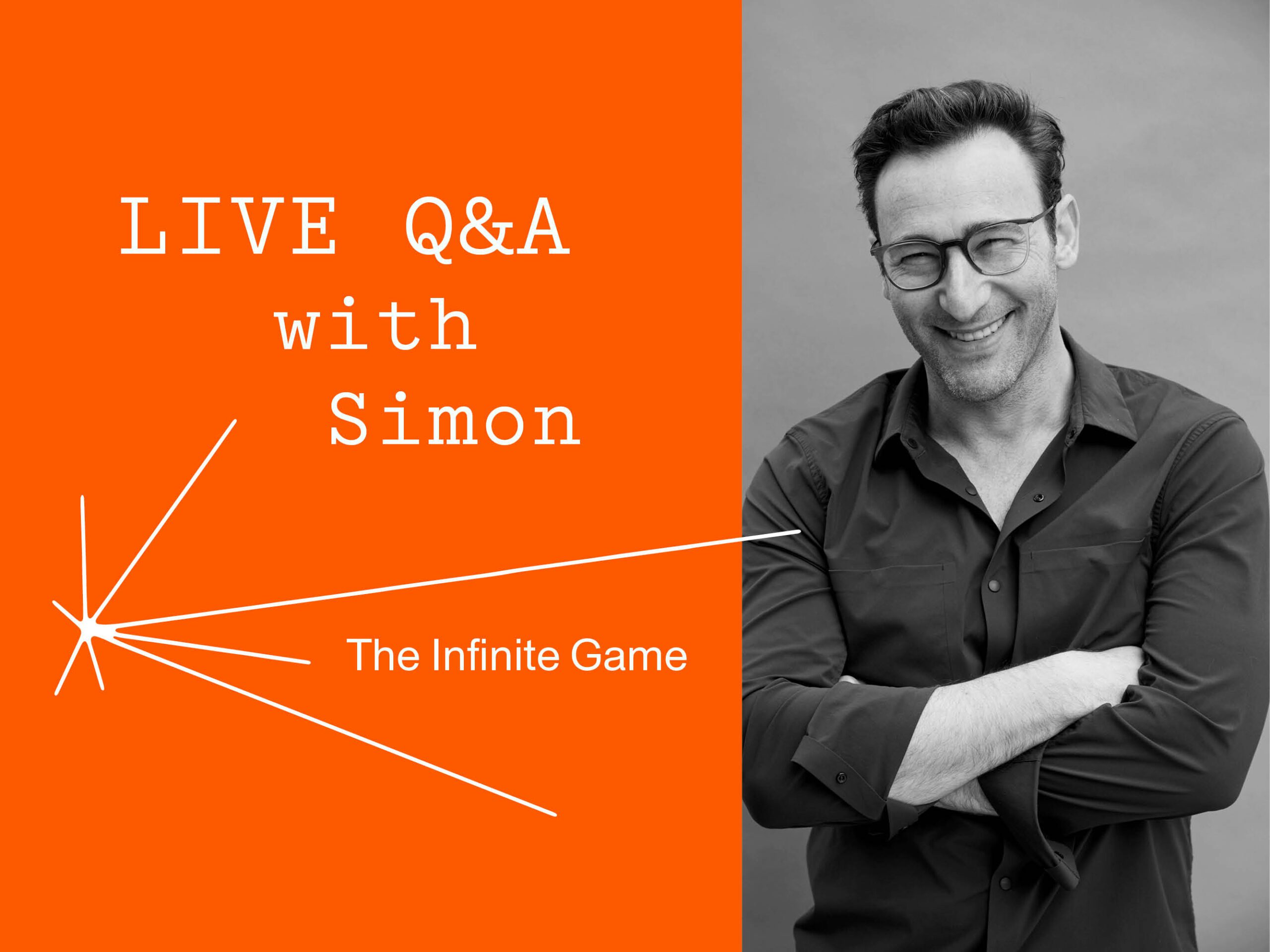
Recently, Simon hosted a Live Q&A across our social platforms to answer questions from people like you, and talk all things Infinite Game. Check out what he had to say below:

Questions and answers have been edited for length and clarity.  

Q: What is the Infinite Game?

Simon: In the mid-1980s, a philosopher and theologian by the name of Dr. James Carse defined two types of games: finite games and infinite games. A finite game has known players, fixed rules, and an agreed-upon objective. Infinite games have both known and unknown players, so you don’t necessarily know who all the players are and new players can join the game at any time. When we play with a finite mindset in an infinite game—meaning we play to win in a game that has no finish line—there are some very predictable and consistent outcomes. The major ones ones being the decline of trust, the decline of cooperation, and the decline of innovation. And if you look, a lot of the challenges that we’re facing in our world—both in business and in politics—are because too many of our leaders are playing with the wrong mindset for the game that they are in.

Q: What other companies have you noticed are playing with an infinite mindset since the book was published?

Simon: Some companies have actually been pretty public about this. Brian Chesky over at Airbnb has publicly said he wants to build an infinite company and be more infinite-minded; I love that. I’ve had conversations with some folks at Nike who said that they’re trying to be more infinite-minded. Walmart is trying to be more infinite-minded.

I think what’s happening is a lot of leaders that are coming in are recognizing that some of those leaders that came before them were so excessively finite-minded that they’ve actually done damage to the companies that they now lead. They have to change their mindsets to actually put their companies back on a longer path. I’m very proud that the little idea that Dr. Carse originated, and that I’ve been able to build upon, is really finding its momentum. 

Q: What do you do to teach kids about the Infinite Game?

Simon: There’s a great story that really captures what it means to live with an infinite mindset… There’s a young monk with a remarkable natural ability for horse riding. And everyone in the village says, “You’re so lucky.” And the monk says, “We’ll see.” And then one day he has an accident, falls off his horse, breaks his leg, and ruins his career. And everyone in the village says, ‘You’re so unlucky.” And the monk says, “We’ll see.” Then war breaks out, and all the young men are sent into battle, but he can’t go because of his busted leg. And everyone in the village says, “You’re so lucky.”

The point is good news, bad news, who knows? Everything bad that happens to us will end, and everything good that happens to us will end. As Maya Angelou said, “Every storm eventually runs out of rain.” But teaching kids about that little Chinese proverb is really, really helpful. 

Q: How do we teach an infinite mindset to Gen Z?

Simon: Well, we need to be teaching it to every generation, and frankly, it’s some of the older generations that struggle the most. It’s the Boomers that are the most finite-minded because that’s the Jack Welch generation, but I digress.  

The way we teach it is the way we teach anything, which is we talk about it, we talk about it, we talk about it. Read my book, read Dr. Carse’s book, talk about it yourself. The great thing about finite and infinite games is that you don’t need me to share these ideas. They’re so simple, understandable, and repeatable.

I think we also need to build it into our schools. Too many schools are finite-minded. We teach math and science, but we don’t teach mindset. We don’t teach how to manage stress, we don’t teach how to view the world. I think we need all of that in our curricula.

Q: How is AI affecting the Infinite Game?

Simon: If AI is used for constant improvement—so if we plug it into a system so that it’s constantly finding errors and mistakes that we can constantly improve something and never feel that the work is done—then I really like it, and I think AI is valuable. When we use AI to try to “win”, to figure out formulas even though there’s no such thing as winning, then I think it only exaggerates all the ills of a finite mindset. It’s like rank or power: is power and rank good or bad? Well, it depends what you’re doing when you achieve it. So I think it’s the application of the AI that I’m more nervous of, and I think it’s important that we know about these two different games so that we apply it in the right way.  

Q: How do we influence people we have no influence over? 

Simon: I get this question all the time. We can only take responsibility for ourselves, and so we have to be the leaders we wish we had. No number of anonymously sent books to our boss will change the way that they lead, unfortunately.

What does change is that we become the examples. And when we lead the way that we think leadership should, what you find is that morale is higher, performance is higher, and any open-minded senior leaders will look down and say “What are you doing?” Then we can tell them, but we’ve got to make the case first. Or, if they continue to ignore us, it’s okay because we’re building great teams that will eventually get promoted out or move to other companies and take all the lessons they learned from us. This is very much a part of the infinite mindset, which is accepting and learning that we may not see results in the short term, but if we keep acting true to our values and keep acting toward our vision, then eventually it starts to ripple. 

Q: What if I’m not a leader? 

Simon: Every one of us is a leader and a follower. The best leaders are the best followers. No matter how senior they get, they still believe they’re in service to something bigger. The pope, for example, is in service to something even bigger than himself. So, believe it or not, the best leaders are the best followers. And if you’re just part of the group, then that’s okay. But if you’re the one who says, “I’m gonna take care of the people in my group, if I’m gonna take care of the people on my team,” you’re a leader.

Good followership looks a lot like good leadership, which is care about the person to the left and care about the person to the right. And the weaker ones are taught gratitude and learn to push harder, and they are welcome back into the team. And so the really interesting thing is if you really choose to be just a part of the team and not actually work toward the team, weirdly you’ll find that the team organically pushes you to the sides to try to teach you a lesson, which is “come be a part of the team”. Because we care about the group, and everybody knows if you support the group, you live longer.  

Q: How can I bring The Infinite Game to my team and make it into an ongoing practice?  

Simon: What I have found if you want to bring new ideas to a team is start talking about them. Just say, “I heard this idea. Can I share it with everybody?” 

All of my ideas started off as conversations. All of my ideas start off as thoughts. Going out for lunch with friends or with teammates and I said, “Can I share with you an idea that I’ve had or have learned about or heard?”

It all goes back to the Law of Diffusion which tells us not to worry about converting people. Find the people who are more drawn to these early ideas. So when you talk to them, some people say, “You’re an idiot.” Okay, that’s fine. We don’t need to convince them. And some people say, “That’s cool! I love that. Where did you learn about that? I want to learn more about that.” And then you’ll start to build a  community of people around ideas. But talk about them—talk about them obsessively. When I have an idea or find an idea, I become obsessed with the idea, and it’s all I talk about for a while. 

Q: Why are Team-Building Programs so effective?

Simon: Whenever I would give a talk, invariably, someone would raise their hand and say, “Simon, it’s all fine and good what you talk about, but our company—we have no budget for leadership curriculum.” I talk about learning listening, about learning how to give effective confrontations and difficult conversations, all these great leadership skills—and people would always say, “We don’t have the budget for it,” or “Our company is too small,” or “My boss has no appetite for this.” And I’d always reply with the same answer, “Can you afford a book? Buy a book; start a Team-Building Program.” 

A Team-Building Program is one of the best ways to start a leadership curriculum without any formal budgets or any formal learning. One of the things we found is when people did start Team-Building Programs, is they sometimes got a little stuck. So what we did is we built a Team-Building Program where I ask the questions, and they come with guided discussions, and we really offer a way for you to go deep and have really good conversations. 

Explore the Infinite Game Team-Building Program here

Q: How do I respond to leaders who have an infinite mindset in their policies but have rolled out increasingly finite measures of performance?

Simon: Well, then they don’t really have an infinite mindset. Every company seems to have a purpose statement on their website, but do they actually make decisions based on or to advance that purpose? And you’ll see that the angel is in the details. So if a leader talks a good game but doesn’t act a good game, then it’s just talk. It’s just marketing. No organization or leader is perfect. They can at least say, “We’re trying to figure this out. We’re struggling to figure this out. We’re open to ideas.” At least if they did that, I’d believe them. But if all their incentives and rewards are finite, then they’re working counterproductively, unfortunately. Again, they may, in their thoughts, be trying to do it and just not have communicated to the team.

Q: Are the recent mass layoffs the result of finite thinking or infinite thinking? 

Simon: The answer is that it depends. If the company is trying to just balance the books, finite thinking. We did see in some companies is they got a little too full of themselves during Covid when some companies and some industries were thriving, and they started to believe it was them.

Peloton, for example: right place, right time, and their business just boomed during Covid. They thought it was because they were geniuses. I’m sure they’re smart people, but they expanded too much, too quickly. Now as the market is leveling off and normalizing to pre-Covid standards, turns out it’s affecting their business. Now they’re having layoffs to correct that lack of humility.

But a lot of companies, unfortunately, are taking advantage of it to manage books. The simple answer is it depends, I hate to say it. You have to look at the leadership; you have to look at the circumstances. 

Q: What are the practical steps you personally take to keep an infinite mindset?  

Simon: Number one, advance a Just Cause. I talk obsessively about my Just Cause—I never make an assumption that people know it, even on my own team. I will say it all the time. So I’m reinforcing it for the team, but I’m also reinforcing it for myself. 

Build trusting teams, which is I work hard to embody and practice the things that I talk about. I’m on my own leadership journey. I make mistakes; I try to be open, honest, and accountable when I make those mistakes, but I’m the first to admit that I’m a student of leadership. That’s all I am; there’s no such thing as an expert. I work hard every day to try and build the teams that I know will advance that cause and help me be infinite-minded. 

The big one, which is actually the easiest one to implement is Worthy Rivals. I’m not trying to beat anyone. I’m not trying to outdo anyone. There are other people who do what I do; I’m not trying to sell more books than them. But I do admire some of them because they do some or many things better than me, and I want to learn from them because I’m always in a state of constant improvement. We also believe in partnering with some of the people that are our “competitors”. We’ve reached out to the CEOs of companies who literally sell similar products as us and we say, “Hey, can you teach us what you’re doing so we can get better at what we’re doing.”

Worthy Rivalry is the easiest place to start, and we will even talk about it with our team. If we have a new project we’re working on, we’ll tell someone, “Go Worthy Rival this.” In other words, find someone who’s really good at this, and let’s learn from them. 

Q: How do we build trust with new and old players as people are constantly coming in and out of the game? 

Simon: Think of it like making friends, which is we’re constantly meeting new people, we have our old friends with the deepest trust, but we have to be open to new people. It’s okay to have a little distance. It’s okay that you don’t have to share all your deepest, darkest secrets, but you want to make people feel welcome, and you want to give people the opportunity to be a part of the team. 

There’s a big misconception about leadership and team-building. is, I hear bad leaders say, “Prove to me why I should trust you.” No, that’s not how it works. You have to give trust, and the leader has to earn it back. When somebody joins the team, we’re the leaders because we’re the familiar ones, so we have to give some degree of trust and earn their trust—not the other way around. Their guard is going to be a lot higher than ours because they’re not part of the team when they feel individual and isolated. In other words, be nice. 

Q: How is a Just Cause different from company values?  

Simon: Company values, which should be immutable, are the mechanisms we use to help us manage our culture to advance our Just Cause. So, a Just Cause is a vision of the future. Our values are the edges on the sandbox to help guide our behavior. For example, one of the things that gets companies in trouble is when they believe in  “growth at all costs”. Our values manage that all costs part. We want to achieve our vision but not at all costs. The ends don’t justify the means; they both have to be honorable. 

Values are the edges on the sandbox we use to help us advance toward our Cause, and it’s those values that help us hire and work with people to know that we can get along and trust each other. 

Q: How can I join your Just Cause? 

Simon: Thank you! First, let’s articulate what my Just Cause is. I believe in a world—I imagine a world—in which the vast majority of people wake up every single morning inspired, feel safe wherever they are, and end the day fulfilled by the work that they do.

I am fully aware that for us to actually build that world, it’s going to take an army of us. It’s going to take millions of us because we have to undo some of the practices from the past and change we’re building our companies, change the way in which we’re leading our governments, change the way in which we’re treating each other. 

As Thomas Edison said, “Vision without execution is hallucination.” And so the best thing you can do is be the leader you wish you had. The best thing you can do is embrace some of the ideas I’ve talked about in Start with WHY or Leaders Eat Last or The Infinite Game. The best thing you can do to be a part of the movement is to be a physical example of the principles I talk and write about. 

Watch the full replay:

Instructor Spotlight: Joseph Kim

We believe the best way to build this world is to commit to building it together, and we’re so grateful for the contributions of our instructors. Without them, we wouldn’t be able to accomplish what we do.

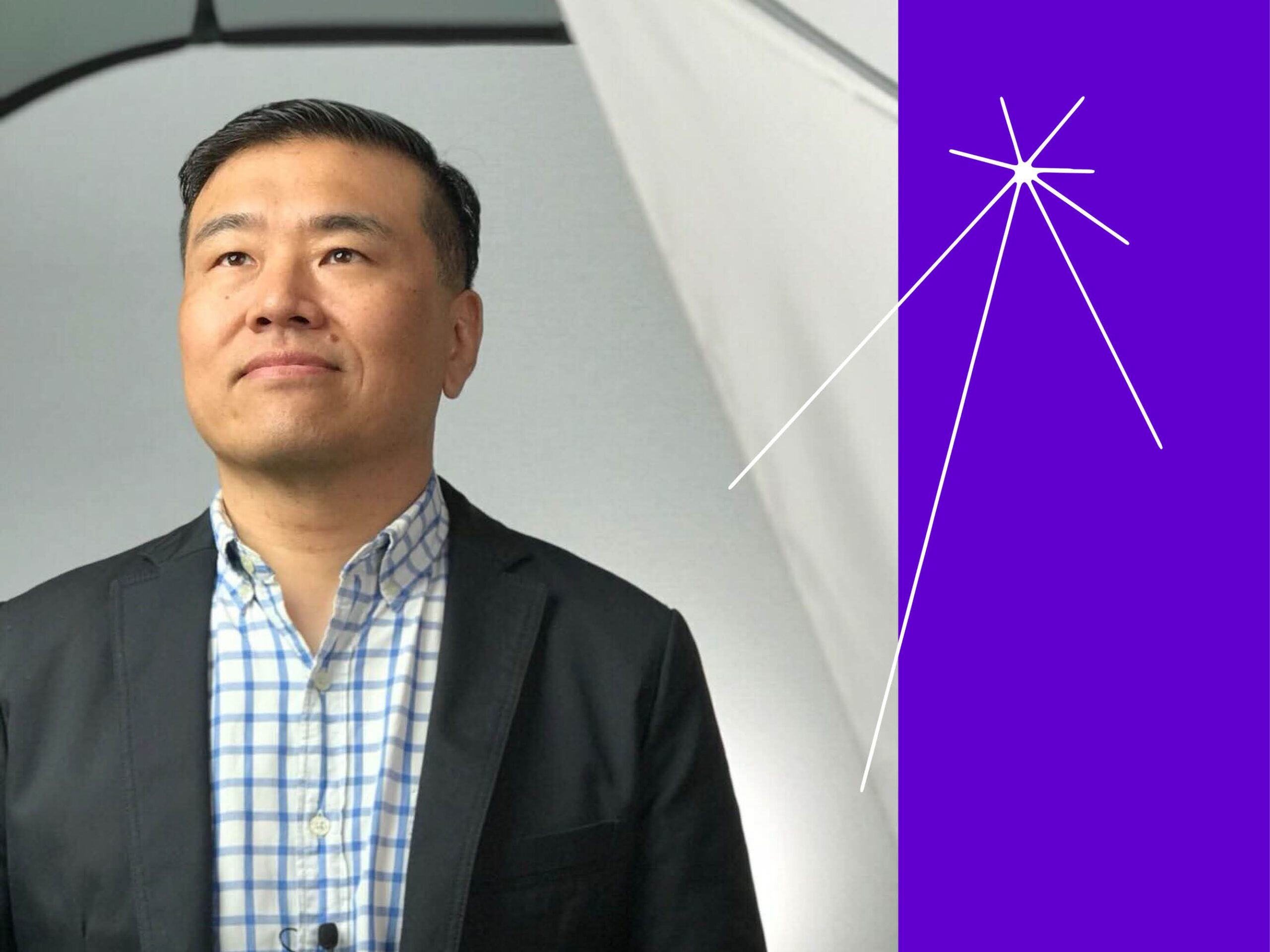
If you’re interested in learning more about us, we’d like to introduce you to Joseph Kim—one of Simon’s Master Trainers!

Simon’s Master Trainers are instructors who specialize in presenting and teaching Simon’s content: Check out our live online classes like Start with WHY, Leaders Eat Last, Leading with an Infinite Mindset, and more. Or, to book them as a speaker for your next event, contact our Experiences Team.

Joseph Kim is passionate about empowering the next generation and believes that tomorrow can be better than today.  He has served as a communication and leadership keynote speaker, trainer, and facilitator for various organizations. Joseph is an alum of Harvard Business School and has a PhD in philosophy from Arizona State University. In his free time, he enjoys riding his motorcycle, playing electric guitar, and training Brazilian jiu-jitsu with his sons.

Read on to learn more about Joe!

How are you today?

Doing great!

What was it that moved you to your line of work?

I wanted to join the movement of inspiration! As I was inspired by the work of Simon and his team, I wanted to join my worthy rival Simon and work to inspire others as he had inspired me.

What do you specialize in?

I specialize in all of Simon’s content that we offer (Start with WHY series, Leaders Eat Last, and The Infinite Game). Before that I was a professor of business communication, with a research specialty in non-verbal communication.

What is one thing from your teachings that you wish everybody would learn/know?

That the choices we make now can impact not only our own future but impact the next generation. It’s amazing how one moment of inspiration can impact the trajectory of someone’s future. I remember when I first heard Simon’s Start with WHY talk on YouTube many years ago, and here I am today.

What is your favorite saying/bit of advice?

There is an ancient saying that says, “We have this treasure in jars of clay.” I love this so much! It shows that there is so much power and value in ordinary things in our lives, and though it may look ordinary we can uncover it to reveal something much much more. I feel like this is true of finding your why or other things we do. It seems so ordinary, but once we find our WHY and can articulate it, we find that everything we do changes.

What is something that will always brighten your day?

Guacamole. I live in Seoul and it’s not easy to make guacamole. I know just a few good places that offer good guacamole in Seoul and everyone is happier once they’ve had good guacamole.

Is there anywhere else we can follow you?

Yes you can find me on LinkedIn here:

How are you today?

Doing great!

What was it that moved you to your line of work?

I wanted to join the movement of inspiration! As I was inspired by the work of Simon and his team, I wanted to join my worthy rival Simon and work to inspire others as he had inspired me.

What do you specialize in?

I specialize in all of Simon’s content that we offer. (Start with WHY series, Leaders Eat Last, and The Infinite Game.) Before that, I was a professor of business communication, with a research specialty in non-verbal communication.

What is one thing from your teachings that you wish everybody would learn/know?

That the choices we make now can impact not only our own future but impact the next generation. It’s amazing how one moment of inspiration can impact the trajectory of someone’s future. I remember when I first heard Simon’s Start with Why talk on youtube many years ago, and here I am today.

What is your favorite saying/bit of advice?

There is an ancient saying that says “we have this treasure in jars of clay.” I love this so much! It shows that there is so much power and value in ordinary things in our lives, and though it may look ordinary we can uncover it to reveal something much much more. I feel like this is true of finding your why or other things we do. It seems so ordinary, but once we find our why and can articulate it we find that everything we do changes.

What is something that will always brighten your day?

Guacamole. I live in Seoul and it’s not easy to make guacamole. I know just a few good places that offer good guacamole in Seoul and everyone is happier once they’ve had good guacamole.

Is there anywhere else we can follow you?

Yes, you can find me on LinkedIn here.

If you have a story about someone you know inspiring people to help others or how Simon’s work has inspired you, send it to us at [email protected], and we might share it here!

Why Simon’s Concept of “The Circle of Safety” is So Topical Right Now

In times of uncertainty, it is crucial to feel safe and secure.

At The Optimism Company from Simon Sinek, we’ve noticed a trend in the past few months of more and more leaders who want us to speak to their teams about the Circle of Safety.

In just the last few weeks, major news headlines have been about: layoffs, artificial intelligence taking jobs, imminent recessions, bank runs, and a number of other economic issues outside our control.

With all this fear and doubt circulating, employees and leaders need something solid and dependable to help their organizations weather the uncertain future.

That’s where the Circle of Safety comes in. With a Circle of Safety, workers can rely on one another to strive towards their shared goals even during the hardest times. When true economic hardship arrives, teams with low levels of trust splinter apart. Trusting teams pull closer together.

Creating trust within organizations is vital. Safe employees are more productive, more resilient, and more creative problem-solvers.

Because of today’s challenges, it’s more necessary than ever to create and strengthen circles of safety in organizations. Without consistent and intentional practice, trusting cultures slowly erode over time.

The Circle of Safety in 25 Minutes

Give your team the tools to trust each other, take risks, and contribute their best efforts to the collective goals of the organization. That is the core mission of the Circle of Safety.

Join one of Simon’s Master Trainers for this 25-minute LIVE online class to understand how to make employees feel safe so they can do their best work:

Building a Circle of Safety for ourselves and those around us:

Simon coined the term ”Circle of Safety” in his second book, Leaders Eat Last. The Circle of Safety is the concept that, since the dawn of civilization, we have needed the feeling of safety and security in order to survive. Back then, it was the elements and predators we needed to protect each other from, and when we felt safe with our own, working and living together, the natural reaction was trust and cooperation.

Today, the world is filled with different types of danger and stress. Since we can’t control those forces, we still have to depend on a network of people that we trust and rely on. This network of people forms our Circle of Safety. So while the idea of creating a safe and supportive environment is nothing new, the use of the term has helped to bring attention to and illustrate the importance of building a strong culture of trust and mutual support in the workplace and beyond.

This is where leaders play a crucial role. In Leaders Eat Last, Simon writes that leaders should act as “circle makers” instead of “line makers.” Line makers are focused on achieving their own goals and advancing their own careers, often at the expense of others. In contrast, circle makers are focused on creating a sense of community and supporting everyone within that community. Circle makers prioritize the well-being of the group over their own individual success.

Leadership isn’t a rank or a position, it’s a choice. So as leaders at any level, it is our responsibility to make the choice to prioritize creating a sense of safety and security within our organizations. By building a culture of trust and respect, we can establish a strong circle of safety that allows our employees to thrive even in challenging times. Leaders Eat Last provides valuable insights into how to create this circle of safety and why it is essential to do so. By following these principles, we can build organizations that are not only successful but also supportive, inclusive, and inspiring.

Looking to Build Trusting Teams or bring the message of Leaders Eat Last to your team?

Key Takeaways:

  • Discover how choosing to protect people before numbers can actually benefit the numbers in the long run
  • Explore why leadership is not an event, but a process that is developed from simple, everyday actions
  • Understand how to create a Circle of Safety and why this is crucial for your team’s performance
  • Learn how to combat the inevitable stresses and dangers that threaten your organization, team, and each individual in your charge

Contact our Experiences Team for a private class, keynote, or workshop: 

New in The Optimism Library: April 2023

Samantha Clarke‘s class “The Great Resignation and Retaining Talent” is a timely and insightful examination of the current state of the workforce and how businesses can retain their top talent. Sam is a happiness consultant, with multiple classes in the Optimism Library. For more offerings from Samantha Clarke, click here

Even today, the effects of the Great Resignation are still being felt by many companies across all kinds of industries.

The pandemic accelerated a growing trend of a large number of employees quitting their jobs in search of better opportunities, better work-life balance, and more fulfilling careers. Even though the pandemic is slowly subsiding in parts of the world, the labor market continues to be tight—and the competition for top talent remains fierce.

One of the most significant impacts of the Great Resignation is the increased pressure on companies to retain their top performers. Companies that fail to prioritize employee well-being, professional development, and meaningful work risk losing their talented employees. In response, many companies are taking steps to improve their work culture and create more flexible arrangements that align with their employees’ needs and preferences.

The newest addition to The Optimism Library is here to help.

This class is perfect for anyone looking to create a positive work culture that values and prioritizes employee well-being and communication. You’ll come away with a better understanding of how to keep top talent engaged while also attracting new employees who share common values.

The Great Resignation continues to be a significant challenge for companies. Those that adapt to the changing dynamics will be better positioned to thrive in the post-pandemic world.

Looking for an easy way to grow your human skills and help your team thrive?

 The Optimism Library is an ever-growing collection of recordings from our very best live online classes. Everything is available online, so your whole team can learn at their own speed and convenience. Our goal in creating this product was to provide an easy, affordable, and flexible way to learn.

With over 40 classes in The Optimism Library, the content covers a wide range of topics, including communication, leadership, productivity, mental health, and mindfulness. And the best part? New content is added every month, so the Library grows alongside you.

The Transforming Power of Compassion

Building the Help Others Industry takes many forms, and this week’s podcast guest shares a message of helping others that goes beyond everyday acts of kindness.

Robin Steinberg is here to share the message of compassion and how it drives social change, especially in the criminal justice system. Compassion goes beyond sympathy or stronger empathy for the distress of other people—compassion drives us to take action to relieve it for and with them.

Simon and Robin discuss the ways systemic issues such as mass incarceration and racial disparities are interconnected, and the importance of treating individuals with dignity and respect. They dive into the transformative power of compassion and empathy in promoting social justice and creating a more equitable society.

...[T]he forces of retribution and vengeance are played out most clearly and most extremely in our criminal justice system. But those forces are played out in our everyday lives outside of the criminal justice system. Somebody hurt us, somebody that we read about, somebody that we disagree with politically. We tend to demonize them and forget that they are also part of our human community… Compassion really only is going to be able to begin when we accept that people aren't their worst moment.

To learn more about Robin’s work and delve deeper into the message of compassion with justice, listen to the full episode below or wherever you listen to podcasts. Then, check out her book The Courage of Compassion, out next week!

When we vehemently disagree with people we’ve never met, we can start to dehumanize them. See them as evil. The only way we can ever advance as a society is when we learn to see each other as human. Complex, messy humans. That’s why we need Robin Steinberg’s message! She understands compassion in a way few others do. As a career public defender and criminal justice reformer, she had to learn to see the humanity in people, even if they may have done horrible things. I’m so proud to publish The Courage of Compassion on Optimism Press—it’s a really important book.

If you have a story about someone you know inspiring people to help others or how Simon’s work has inspired you, send it to us at [email protected], and we might share it here!

Sharing Optimism through Voice Acting

Here at The Optimism Company, we imagine a world where everyone can wake up every single morning inspired, feel safe wherever they are, and end the day fulfilled by the work
they do.

Our guest on the podcast this week lives out that dream and shares the message of optimism in a very unique way.

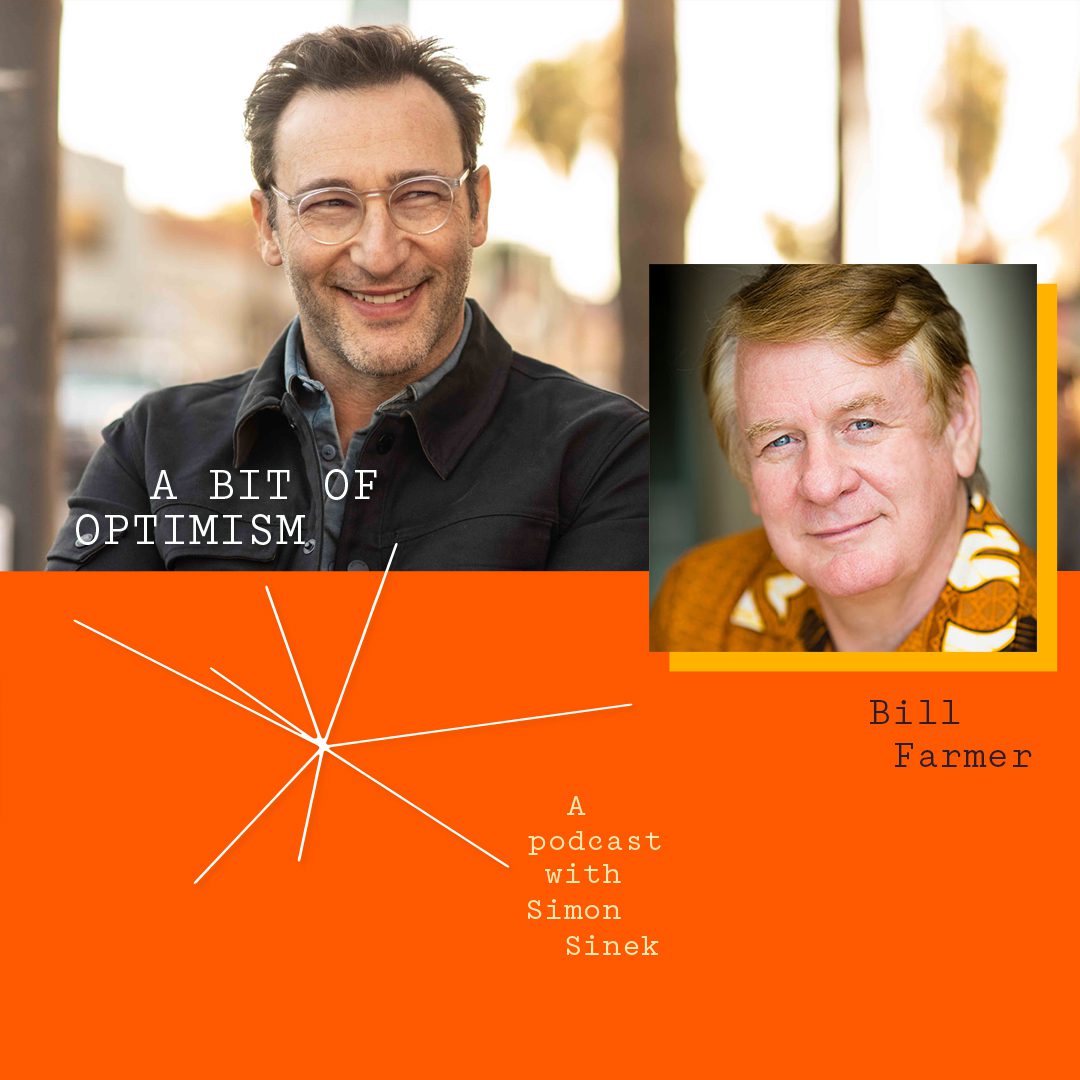
You may not recognize his name, but you would know his iconic voice anywhere. His name is Bill Farmer and he’s been the voice actor for Goofy (yes, Mickey’s friend) for over 30 years. Bill shares his journey from being a struggling comedian to becoming one of the most iconic voice actors in the industry. He talks about his early days, his love for performing, and how he landed his dream job with Disney. The episode is full of laughter, fun anecdotes and impressions, and insights into the world of voice acting.

The podcast episode is not just about Bill’s journey but also about the joy that Goofy has brought to people’s lives over the years. Simon and Bill reminisce about their childhood memories of watching cartoons and how these characters continue to resonate with people of all ages.

And the message of this episode has resonated with you all, too, because Goofy and his values have stayed with you.

I listened to this episode with my 8 year old on the way to basketball practice. He wanted to listen to it again on the way to school this morning….

This message was so perfectly timed for me. I'm tackling some tasks I've been procrastinating starting or trying to finish (again) for a while now. I was a huge fan of mickey growing up and got to meet some of the characters once at a small event. Goofy was the one who shook my hand and danced with me. I never forgot that. How apt I hear this interview at this moment...Thank you.😍​

This was my favorite episode to listen to - I laughed out loud SO many times 😍 What a gift!!!!!

Wow, what an amazing post! Bill Farmer is truly a Disney Legend and has brought so much joy to countless people through his incredible voice work. It's inspiring to hear how he views his work as an act of service and how he has dedicated his career to bringing happiness to others. I can't wait to listen to the full conversation on A Bit of Optimism. Thank you for sharing!

You see, the thing about Bill is that he doesn’t take any of the credit for the impact of his characters. He’s remained humble and encouraged in the work he does because he is simply their voice. 

I enjoy entertaining, and I'm just so glad that people care about what we're doing. And as Wayne, all one who did Mickey for the first 25 years until he passed away in 2009, always said, you know, we're just carrying the torch for a little while with these characters. They'll be around here a lot longer than we will and have been around a lot longer before. So we're just trying to do a good job in the time we've got with it and get to hang around with some very interesting characters in the studio. And I'm just so glad that people enjoy that.

If you have a story about someone you know inspiring people to help others or how Simon’s work has inspired you, send it to us at [email protected], and we might share it here!
Curiosity is essential
                for progress.
SimonSignature

We fully agree, so we like to reward curiosity.
Use code GETCURIOUS for 20% off your next purchase.

A spark is something quite small and, by itself, not very powerful. But a spark has the ability to ignite. An idea is like a spark; alone it is just a set of words, but it too can ignite. A great idea can inspire others to dream bigger. Let us all work together to ignite something greater than ourselves.

Let us all be a Spark of Optimism.