How to Talk About Your Weaknesses

It’s hard enough that we have to talk about our strengths to others, but our weaknesses? That’s just the worst.

Even more confounding, we’re only asked to talk about our weaknesses and our strengths in an interview, but after we get the job, we’re rarely ever asked to talk about what makes us so great again. Our weaknesses, however, seem to come up in every time we make a mistake or something goes wrong.  So instead of learning to talk about what makes us great, it seems more valuable to learn how to talk about what holds us back if, for no other reason, it can help us move forward.

There are two very common mistakes we make when answering the question, “what’s your biggest weakness?”  In an attempt to be clever or even be honest, we can end up doing ourselves more harm than good.

1. Replacing a weakness with a strength

This one is very common. “What’s your biggest weakness?” the interviewer asks. “My biggest weakness is I’m a perfectionist,” we respond thinking we’ve outwitted the interviewer or dodged a bullet. Ironically, by not answering the question, we are making it more difficult for the interviewer, if they hire us, to put us in a position of strength. In other words, in an attempt to sound strong we increase the likelihood of being weak.

2. A little too honest

Some people when asked, “what’s your biggest weakness,” get straight into the thick of it, “I’m really disorganized. It’s really the thing that holds me back sometimes.” Though I appreciate the honesty, the answer lacks context. We may as well look someone in the eye and say, “I’m not the person you’re looking for because you can’t rely on me.”

The best way to talk about our weaknesses is to be honest about them, for sure, but in the context of the balancing strength. Here’s what I mean:

“What’s your biggest weakness?”

“I do my best work in a team. There is nothing I love more than working with others, the back and forth of ideas. I love it. In contrast, you won’t get the best work out of me if I’m always on projects that require me to work alone.”

Here’s another example:

“I’m the one who’s always looking into the future. Where others are working to figure out what we need to do tomorrow, I’m already looking for opportunities on the horizon – six months, a year, sometimes five years ahead. Organizations with a desire to innovate and go far for a long time love that about me. The flip side is I can be a little disorganized with what I need to do today or tomorrow.”

Everything in the world is balanced. For every weakness we have, we have a strength that explains or provides context for that weakness. Both these examples offer honest answers to the question but do so within the context of why that weakness exists. The result? We’re more likely to be seen as trustworthy because we’re willing to offer an honest answer to vulnerable questions and, more importantly, the person listening to us is more likely to put us in a job that highlights our strengths and mitigates our weaknesses…which is good for us and good for them.

Knowing how to talk about our weaknesses, it turns out, can be one of our greatest strengths.

How to Make Others Feel Like They Matter

We recently sat down with author and researcher Zach Mercurio, Ph.D., who is something of a Jedi master on the science of leadership. In addition to teaching at Colorado State University—where he’s an honorary fellow in psychology—he regularly rappels into global organizations to train leaders, boost both morale and productivity, and help people make other people feel like they matter. He’s also an Optimist Instructor here at Simon’s The Optimism Company. 

Zach is a brilliant thinker with insights you may find useful in the workplace. In this interview, he explores the link between gratitude and significance, shares strategies for creating supportive work environments, and cites a few ways we can be better leaders and colleagues. We hope you enjoy it. And if you’re curious to learn more about Zach, feel free check out his new course he teaches with Simon, called How to Be a Leader People Actually Trust (and Maybe Even Love)

This interview has been edited for length and clarity.

You talk a lot about the concept of “mattering” at work. What does that really mean?

We experience mattering when we feel valued by those around us and know how we add value to their lives. The need to feel significant to others begins at birth when we reach out our arms to find someone to care for us. From our first moments, our survival depends on mattering to someone. Our quest for significance never goes away. That’s why when our instinct and need to matter is fulfilled, it’s emotional, energizing, and life-giving.

What are some common signs that someone in an organization feels like they don’t matter?

When people feel insignificant, they either withdraw or act out in desperation. Signs of withdrawal are isolating oneself, disengaging, or showing less interest than usual. “Quiet quitting,” for example, is actually the inevitable withdrawal response to someone who feels insignificant at work. 

Another consequence of withdrawal is loneliness. Loneliness, research shows, isn’t an outcome of having too few people around you; it’s the consequence of feeling that you don’t matter to the people around you. 

People can also act out in desperation when they feel insignificant. In my practice, complaining, blaming, gossiping, or other “so-called” disruptive behaviors are often the result of people feeling insignificant and seeking to be seen or heard. 

How do you think workplaces can get better about seeing employees and making them feel valued?

Showing others how they matter seems like common sense. The issue is that common sense is usually not common practice. One survey revealed almost 30 percent of employees feel invisible or ignored. Only 15 percent of people say thank you at work regularly.

If you want people to show others how they matter, make sure they have opportunities to learn, hone, and practice the essential skills of seeing and hearing others, showing meaningful gratitude, and ensuring others feel that they are needed. 

Then, take a look at your environment. Does your environment make it possible for people to enact these behaviors? Do you evaluate these behaviors? Do you reward these behaviors? As W. Edwards Deming once said, “Every system is perfectly designed to get the result it does.” 

Is your system designed to ensure people feel that they matter?

What’s a simple way we make people feel like they matter? 

One simple way to show someone the difference they make in your life is to use the words, “If it wasn’t for you…” and then show them exactly how and why you rely on them. Try it today, and you will see and feel the power of mattering. Trust me. 

What advice would you give to someone who struggles with feeling like they matter? 

You can’t change how others treat you. But you can learn to see your significance by focusing on the unique difference you make in others’ lives daily. We sometimes miss out on seeing this impact due to what’s known as the “underestimation bias,” which is our tendency to downplay the impact our actions have on others. My advice is to overestimate your effect on others. Your small actions make more of a difference than you think. 

What small actions could we focus on?

Look for small moments where you made a difference today. It doesn’t have to be big. Even if you can remind yourself, “I smiled at my barista,” “I made my kids’ lunch,” or “I helped my co-worker complete a project,” these statements are rooted in reality and can show you the evidence of your significance. 

Two questions I ask my kids at the end of the day are: “Who did you help today? Who helped you today?” The questions we ask ourselves determine what we pay attention to. Ask yourself questions that direct your attention to your inevitable impact.

It’s important to remind yourself how you’re needed. If you’re here reading this, someone depends on you. It could be a partner, child, family member, co-worker, boss, or client—even a stranger. Someone needs you today. 

You mentioned “meaningful gratitude.” Can you explain the connection between gratitude and mattering?

To maintain the belief that we matter, we must see the evidence of our significance around us. When we express gratitude for another person, we remind them that their unique presence matters in our lives. Showing gratitude is a social skill. As psychologist and gratitude expert Robert Emmons describes, gratitude is an “affirmation of the good.”

The hallmark of meaningful gratitude is that it is affirming. When we affirm someone, we strengthen the belief that they’re significant.

And it’s not just saying “thank you.” It’s more. 

Right. Meaningful gratitude is specific and tied to one’s impact. Anytime you’re going to say “thank you,” go one step further and show people the difference they make for you and how they make it. Remember to name the unique gifts you see in them and show them how they made a difference in your life or work. 

Some research shows that showing gratitude can improve our relationships in a matter of days. How? Experiencing gratitude activates what’s known as our reward system and releases dopamine. Gratitude also changes our neural pathways in areas controlling empathy and interpersonal bonding.

What’s a story of gratitude that has stuck with you? 

I once led a workshop with about 200 school staff and teachers, asking them to write down the moment they most felt like they mattered. That’s when I noticed Jeanine in the middle of the auditorium, shaking her head, looking upset. When I asked her if she’d share her thoughts, she said, “I can’t think of a moment. I’ve been here 14 years, but I’m just administrative support. I do the schedules and paperwork processing.”

Suddenly, teachers began raising their hands. One said, “I wouldn’t have a class to teach if you didn’t do your job.” Another added, “You’re so good at what you do—always quick, always thorough.” And yet another said, “Our kids wouldn’t graduate if you didn’t process the transcripts.” One by one, they expressed how much she meant to them.

Afterward, Jeanine came up to me and said, “I guess I do matter.” That moment stayed with me. It showed how meaningful gratitude can affirm someone’s significance. Jeanine saw, in real time, the impact of her work. It was powerful—and a reminder of how rare and necessary that affirmation is for so many.

Why Being Healthy Isn’t Just About You

When most people think about getting healthy, the focus is usually on themselves: living longer, feeling better, or avoiding illness. But what if the real reason to prioritize your health isn’t just for you—it’s for the people you care about?

“Illness starts with I, wellness starts with we,” bestselling author Mark Hyman, M.D., told Simon on this week’s edition of A Bit of Optimism

Think about it: when you’re run-down, sluggish, or just feeling lousy, it’s hard to be a great parent, friend, or partner. You can’t be fully present. And if you’re dealing with chronic health issues, those closest to you are affected, too.

Simon sums it up: “I choose to eat well, not for me, but so I can be a better friend, a better parent, a better partner.” 

“You’re Only As Healthy As Your Five Closest Friends”

Hyman shared research that underscores how interconnected our health really is. Studies show that when one person in a group makes a healthy change—like quitting smoking or eating better—their friends are more likely to follow. “You’re only as healthy as your five closest friends,” he said. 

But there’s a flip side, too. Hyman highlights that loneliness is as dangerous as smoking two packs of cigarettes a day. And it’s everywhere—making it harder for people to maintain good mental health.

Here’s the kicker: poor health and isolation feed into each other. If you’re not feeling your best, it’s harder to connect with others. And without those connections, your mental and physical health can suffer. It’s a vicious cycle, but one, Hyman says, we can break by treating wellness as a team sport.

Healthy Habits as Acts of Service

This mindset shift—from taking care of yourself for your sake to doing it as an act of service—can be powerful. When you eat better, exercise, or get enough sleep, you’re not just doing it to avoid diabetes or live longer (although those are nice perks). You’re doing it so you can be the parent who’s patient, the friend who listens, or the partner who’s truly present.

So, the next time you’re thinking about skipping that workout or grabbing junk food, ask yourself: how will this choice impact the people I care about? Because staying healthy isn’t just about living longer—it’s about showing up, fully and wholeheartedly, for the people who matter most.

For the full conversation between Dr. Hyman and Simon Sinek, check out A Bit of Optimism. It’s an inspiring reminder that our health choices echo far beyond ourselves.

Good News for Social Media! New Study Shows the Internet Isn’t All Bad

We’d all prefer a friendlier internet—one that builds connections, fosters understanding, and makes us feel a little better about the world.

But (no shocker here) today’s hyper-connected world doesn’t always feel so rosy. In fact, it can sometimes feel downright toxic. Here’s the good news, though: According to some insights from organizational psychologist Adam Grant, most of the negativity we encounter on social media comes from a shockingly small percentage of users.

Read on to discover some reasons to stay optimistic about today’s social media landscape—along with a few ways we can all make a positive difference.

The Minority That Makes the Majority of Noise 

Here are two eye-opening statistics from study just published in the academic journal Current Opinion in Psychology:

  •  Just 3% of active users on social media are considered toxic, yet they generate 33% of online content. 

  • Only 1% of online communities are responsible for launching 74% of online conflicts, and a mere 0.1% of users spread 80% of the fake news. 

Startling, right? The negativity we encounter is often the work of a small but highly active group of users.

For the majority of people who log in to connect, learn, and be entertained, this vocal minority can create a disproportionate sense of discord. Because they generate so much content and incite so much interaction, it can feel as though their views and behaviors are the norm rather than the exception.

Why Are Negative Voices So Prominent? 

There are several reasons why the most toxic voices on social media tend to dominate the conversation:

1. Algorithm Bias

Social media platforms are designed to maximize engagement, and studies have shown that people are more likely to engage with posts that evoke strong emotions—particularly anger. As a result, algorithms often prioritize controversial or inflammatory content, making toxic voices more visible. This strategy has most recently started to be coined as “Rage-Bait”.

2. Human Bias Toward Negativity

Our brains are wired to pay more attention to negative information, a trait that likely evolved to help our ancestors survive. However, this negativity bias can backfire on social media, where we’re constantly bombarded with information. Negative posts stand out and are more likely to stick in our minds, leading us to feel that they represent the majority opinion.

3. Echo Chambers:

Toxic users tend to find each other and congregate in like-minded groups, creating echo chambers that amplify their views. Within these spaces, extreme opinions become more normalized and members are emboldened to spread their beliefs, often fueling conflict and misinformation on a larger scale.

How This Skews Our View of Humanity

When a small but loud group dominates the conversation, it can have a profound impact on how we view the world and each other. Constant exposure to negative content can lead us to believe that humanity is more divided, hostile, and selfish than it really is. This perception can affect our mental health, making us feel anxious, cynical, or even hopeless.

Research shows that social media can impact our self-esteem and our relationships, especially if we internalize the negativity we see online. When we start to believe that toxicity is the norm, it’s easy to feel disillusioned and disconnected, even though the majority of users are positive, supportive, and constructive.

What Can We Do About It? 

While we may not have control over social media algorithms, we can take steps to ensure that our own experience is healthier and more balanced. Here are some practical strategies:

1. Curate Your Feed:

Be intentional about who you follow. Seek out accounts that focus on content that inspires you, educates you, and makes you feel good. Following creators who align with your values can help you create a more positive outlook on life as well as your feed.

2. Engage Wisely:

Remember how we mentioned the term “Rage-Bait”? Well it’s just that– bait. And we suggest you don’t take it. Avoid engaging with toxic content or users. Even negative interactions, such as arguing in comments, can inadvertently boost their reach. Choose to support and engage with positive content instead.

3. Report and Mute:

Most platforms offer tools to report or mute users who spread negativity or misinformation. Use these tools to filter out toxic content and create a safer digital environment for yourself.

4. Be Mindful of Your Own Impact:

Each of us has the power to contribute to a more positive social media space. By sharing authentic, thoughtful, and supportive content, we can help counterbalance the negativity and show that there is more to humanity than what the vocal minority might portray.

Obligate Ram Ventilation: A Shark’s Approach to Career Success

Careers are like a shark. To be successful we have to keep moving forwards.

In order to breathe, most sharks have to keep moving at all times. The forward motion allows the oxygen-rich water to pass into their mouths over their gills and out through the gill slits. If they stop moving forwards, their gills won’t work, they won’t be able to breath and they will sink to the bottom and die.

This system is called “obligate ram ventilation.”

Obligate: As in obligatory, as in they need to do it.

Ram: As in forward moving.

Ventilation: As in air.

We’ve all been at points in our careers when we feel like we have trouble getting air. We’re suffocating doing whatever we’re doing. What resuscitates is often something very simple: moving forwards.

Sometimes that means getting a new job, sometimes that means taking the bull by the horns with the job we have. But it always means looking much further beyond where we are now and swimming in that direction. It doesn’t matter if we go in a straight line to get there, as long as we’re moving.

Stop moving, we die. Keep moving, we live. It’s that simple.

To keep alive, we need to make decisions. We can’t sit around and wait…or we die.

To keep healthy, we need to know where we’re going, we need to have a purpose or a cause or a belief, a reason to get out of bed. Without something to swim for…we die.

To innovate, to have ideas, to contribute, we need to do things outside our job specs: read books, watch movies, travel, meet new people, do new things. If we do the same thing everyday over and over with no forward momentum….we die. 

To make progress, we need to execute, produce something, ship. If we spend all our time trying to make it perfect and never get it out the door…we die.

So the next time someone asks you the secret to a good career, tell them it’s simple: obligate ram ventilation.

Leaders Should Assign Responsibility, Not Tasks

On this particular night, Michael ordered the soup. “Is it vegetable stock or chicken stock?,” he asked the waitress. “Vegetable,” she replied. “Are you sure,” Michael said, “I can’t have it if it’s chicken based.” “It’s vegetable,” replied the waitress again confidently.

My friend Michael is a strict vegetarian. He loves going out for dinner with his friends and never complains. He can always find something to eat, he says. When we went out for dinner recently, I witnessed a little trick he uses to ensure he stays a vegetarian when he’s not doing the cooking himself.

The soup arrived. It looked good and smelled even better. Again Michael asked the waitress, “you’re sure this is vegetable stock, right? Because I’m really allergic to chicken and if there’s any chicken in it I will have a seizure.”  And with that the waitress’s eyes got a little bigger. “Lemme just check,” she said as she went off to ask someone else. Within less than a minute, she walked back and took the bowl of soup away from Michael. “It’s chicken stock,” she said.

Until the waitress was accountable for Michael’s health, she didn’t seem too interested in ensuring that her answer was indeed right. The time it took her to find out was seconds. Giving Michael what he preferred didn’t seem to motivate her until she thought she may be responsible for anything more than disappointing a customer.

But this is not a story of how we sometimes have to lie to get someone to care about us. It’s actually something more positive. As soon as Michael shifted the accountability to the server, she was much more willing to invest more time and attention to Michael’s needs. In other words, when we make others accountable for what could be even negative results, people rise to the occasion.

We could all do a bit better at giving others accountability for things at work. If we give someone responsibility but then double check their work a hundred times before sending it to the client, then they are no longer accountable…we are. If we demand that someone ask us permission before doing anything, then we are the ones giving permission as opposed to assigning responsibility.

People are funny animals. When given serious responsibility, we tend to take it seriously and almost always rise to the challenge. The best organizations know this well. They don’t assign tasks to their people, they assign responsibility. And with shared responsibility, people tend to seek help from each other more often, increasing the quality of teamwork.  The reason is simple, when we work together, we’re more likely to succeed than if we work alone.

It’s the most poetic of paradoxes. The more individual accountability we give to someone, the more they are willing to accept the help of others to ensure everything goes right. Even the server knew that.

3 Things Every New Leader Should Know, According to a CEO

Stepping into a new leadership role? Congrats! 

It can be both an exhilarating and overwhelming experience. It’s the moment when you’re expected to inspire, guide, and make decisions that impact those around you. While that responsibility is exciting, it’s also daunting, especially when you’re navigating uncharted waters and hearing statistics like the one out of the Center for Creative Leadership that states that around 40% of new leaders fail within their first 18 months. So we figured we could offer some pointers to help you thrive. 

We asked Kristen Hadeed, Optimist Instructor and founder and CEO of Student Maid, to share some invaluable pieces of advice she wishes she had known as a new leader. As someone who learned firsthand that those early leadership years are full of crucial lessons, she was thrilled to dip into her wealth of experience and give her top three tips for any incoming leader.

1. Listening Is More Than Just Hearing

Kristen candidly admits that in her early days of leadership, she wasn’t a great listener. She was often distracted, multitasking, and more focused on responding than understanding. “I was the leader that when you walked in, my fingers are doing this,” she says, mimicking typing, “and I’m like, yeah, come on in, I’m listening. Well, if your fingers are doing this, you are not really listening.”

Leadership is about truly listening—not just to words, but to what’s left unsaid, too. One powerful phrase that transformed her approach is, “Tell me more.” It opens doors for deeper connections and understanding. Whether it’s in feedback, discussions, or casual conversations, she urges leaders to be curious and fully present. It’s through this kind of intentional listening that you can build trust and foster a culture where people feel valued.

2. Disagree and Still Support

As a leader, you might believe that achieving consensus was key to success. Sure, you should strive to ensure everyone agrees before moving forward, but the fact is that seeking total agreement wasn’t leadership—it was stagnation. “If everyone is always agreeing with you, someone does not feel safe being honest,” she notes.

A healthy leadership culture allows room for disagreement. Kristen encourages leaders to make their beliefs clear, take risks, and embrace different perspectives. Even when team members disagree, they should still feel supported. 

“I get it. I respect it. I understand why you feel that way. I need to ask for your support,” she says. Adopting language like this into your leadership style is a way to acknowledge differing views while maintaining unity. Remember, leadership isn’t about unanimous agreement; it’s about fostering growth through respectful disagreements.

3. Embrace the Growth Mindset

One of the biggest hurdles for new leaders is the fear of failure. 

Kristen admits, “ I heard a lot about the “growth mindset” early on, but struggled to grasp its true meaning. Over time, I realized that a growth mindset is about leveraging your past experiences—call it your “resilience resume”—to face new challenges with confidence.”

So when you are facing your next difficult obstacle, think about everything that’s on your resilience resume and remember that this moment, this obstacle, too, will be on there one day. Leadership is hard, but that’s where the growth happens. Failure is not only inevitable, it’s a learning tool.

Leadership is a journey, not a destination. Kristen’s advice to new leaders is simple yet profound: if it’s not hard, you’re probably not doing it right. Embrace the challenges, learn from every experience, and remember—you’ve got this. Leadership is supposed to be hard, but it’s also one of the most rewarding journeys you’ll ever take.

For more, check out The Optimism Library.


Purpose Cannot Be Rationalized

I felt sick. I wanted to curl up in a ball and be alone. I didn’t want to talk to anyone.

I was ashamed.

To most people, what I did would seem a trifle, but to me it was much deeper. I gave a talk to an organization that violates the very core of my beliefs.  In my mind, I felt like a sellout.

In my pre-engagement calls, I had a bad feeling about this group. They treated me like some vendor. I could barely get a question in because they were talking so much. They also sent an email telling me what to wear – dress pants and a jacket. Had they done no research on me? I always wear jeans. But I talked myself out of it, “stop acting like a diva,” I told myself.

I sat backstage waiting for my time to speak, listening to the executives give their talks to the group. They presented themselves as a company that sells financial advice, but in my opinion, they weren’t doing it in an honorable way. It seemed to me to be more like a pyramid scheme; a multilevel marketing organization that makes money on recruiting new financial planners and having them use their “system” to win clients. All they did was talk about money and who were the high performers. Never once did they talk about helping their clients – the people they are supposed to be serving.

I believe in helping people and doing right by others. This company preyed on people’s ambitions. They weren’t interested in helping people, they were interested in exploiting them and profiting off their risk. I felt sick. I didn’t want to be there and I didn’t want to be a part of it.

I made my choice. There was something I had that they didn’t: the microphone. They were going to put me on the stage, turn on a spotlight and let me speak, uninterrupted for 60 minutes. I would use that time to share my message. To preach. And preach I did.

I spoke of the power of trust. I spoke of giving to others as the most selfish thing any person could do, because the more we look out for others, the more others will look out for us. I chastised systems that manipulate (and I stared right at the senior executives when I did).

I told stories I had heard from my time with the military, stories of heroism and sacrifice. “They give medals to people who are willing sacrifice themselves so that others may gain,” I said. “In business, we give bonuses to those who are willing to sacrifice others so that we may gain. We’ve got it backwards,” I implored.

They clapped at the end, but I didn’t stick around. I walked off the stage, grabbed my stuff and walked straight out the back door. I didn’t talk to anyone and I didn’t want anyone to talk to me. I felt sick and ashamed that I was a part of this.

I joined the daily huddle call our little company has where we share what we’re up to for the day and ask for help if we need it. I didn’t follow the normal procedure. Instead, I confessed. I told them how I felt.

My team was amazing. “Don’t sweat it,” they said, trying to make me feel better, “we’re sure your message resonated and you converted a few.” One by one they took turns trying to help me see something good that may have come from this experience. But purpose cannot be rationalized.

I remember when I worked in the advertising industry and I asked one of the executives what societal good advertising does? “We help drive the economy,” was his response. So did the manufacturers of gas chambers during the Holocaust. Finding elements of good does not equal a noble purpose. It’s just rationalizing.

Providing jobs, driving the economy, serving the shareholder are not purposes. They are rationalizations used when a greater cause or purpose is not clear or not there.  Real purpose has a clear and definitive direction. It is a path that points towards a very specific vision of the future. Rationalizations have no destination, they are simply a calculation to demonstrate some benefit to justify the actions. Rationalizations are just that: rational. In contrast, purpose is deeply emotional. This is why we feel passion and intense drive when we are involved with something that has purpose. And it’s why we get that sick feeling when we do something in violation of that purpose. There is no sick feeling from violating a rationalized purpose…nor is there an invigorating passion to pursue it.

Because a true sense of purpose is deeply emotional, it serves as a compass to guide us to act in a way completely consistent with our values and beliefs. Purpose does not need to involve calculations or numbers. Purpose is about the quality of life. Purpose is human, not economic.

I thanked my team for their support, but insisted that we could not and should not try to rationalize making these kinds of errors.  They are mistakes and we should learn from them to avoid finding ourselves in the same position again in the future. We should feel ashamed when they happen and we should also hold each other accountable and support each other to avoid decisions that would leave us in a position where we are forced to compromise what we stand for. We’ve already implemented new checks and balances to avoid the same situation happening again.

The company I spoke for already signed a contract for me to speak at another one of their events later this year. The problem for them is, I won’t be there. There is no contract on the planet that can force me to violate what I stand for. I will lose money and I will certainly ruffle some feathers…and that’s fine by me.  They will all get over it in due course…I wouldn’t. They will rationalize why I was the wrong person for the job anyway. But I could never feel whole for showing up, no matter how much money they offered. Money is a calculation. My values are who I am.

A Conversation with President Joe Biden

Leadership is deeply personal. As people change, the way they lead has to change, too.

Few leaders have navigated as much change as Joe Biden. He was elected to the Senate at 29 and will end his time as President at 82. The number of things he has witnessed and been a part of over the course of his career is remarkable. His journey has been shaped by unlikely friendships and profound personal loss.

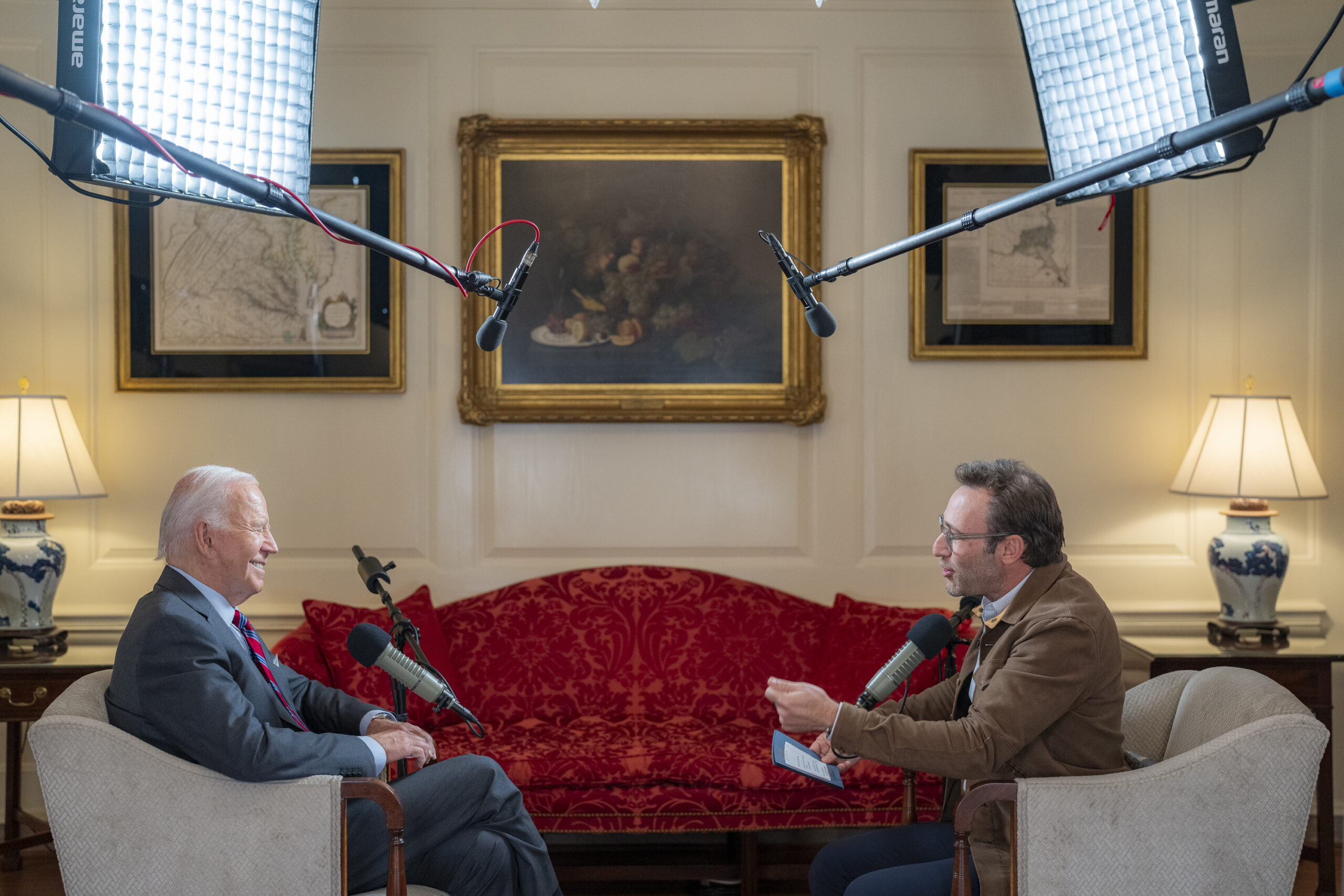
I had the honor to sit down with President Biden at the White House to reflect on how his experiences have influenced his approach to both life and leadership.

I chose to stay clear of politics and instead focused on the lessons that are applicable to all Americans…and indeed all people. I hope you find it insightful and inspiring.

You can listen to this episode of A Bit of Optimism here or watch the episode on YouTube.


A Lifetime of Leadership with President Joe Biden


SIMON: Mr. President, thank you so much. This is such a treat for me, as a student of leadership, to sit down with somebody who — I mean, whether you know it or not, you’ve studied leadership for most of your life.  

And so, I want to start with a question that’s rather timely, if I may. My 13-year-old nephew, Jacob, is running for class president today, actually. And so, I was wondering if you have any words of advice for young leaders on what he should expect should he win the election that he’s running for?  (Laughs.)

THE PRESIDENT: He should expect to have to do what he said he’s going to do. 

Look, I remember I used to stutter when I was a kid, but I was always sort of the leader of the pack, of my gang. And I was elected class president in grade school and high school.  

And the biggest thing is, I think, for him to let people know that he cared about what he said.  And it sounds silly to say that, but I really mean it.  It doesn’t matter how old you are.  People know whether or not you meant what you said.  

SIMON: When did you learn that lesson?

THE PRESIDENT: I kind of won the gene pool lottery.  My dad used to say, “You’re a man of your word.  Without your word, you’re not a man.” From the time we were kids, when we were little, my mother would look at you and say, “Joey” — she was five foot one, had a backbone like a ramrod, but she was everybody’s Mother Confessor. She’d say, “Joey, remember, courage lives in every heart, and someday it will be summoned. You’ve got to do what you say you’re going to do.”

I think of all the expressions that I grew up believing, my mother would say that, “If you have to ask, it’s too late,” and my dad would say, “Family is the beginning, the middle, and the end.” I mean, for real. If you ask any of my friends I grew up with, they can quote my mom — (laughs) — and my dad and my grandfather and others.  

So, it was all about just — I know it sounds silly, but my dad’s favorite word was “dignity.”  He’d say, “You’ve got to treat everyone with dignity. Everyone’s entitled to be treated with dignity, no matter who they are.” 

And people can know it.  They sense it.  They feel it.  They can taste it.  

You say you won the genetic lottery, but it sounds like you won the lottery for parents.  

Well, that’s what I meant. I was fortunate that I had the benefit of a family that was middle class; we didn’t have any money. But it was all about how you treat everybody.

And, you know, I remember when I was a young senator, I met my dad at the Hotel DuPont, which was a four-star restaurant at the time.  He was in town for business. He ran an automobile agency. And I remember coming down the elevator, and the Chairman of the Board of the DuPont Company came down. And my father said, “Hello.”  He said, “Hi.” And just — that was all, just nice. Then he walked over to the shoeshine guy, and he talked to him. I said, “Dad, why is that?” He said, “Everybody deserves to be treated with dignity.” That was my father.  

These are the stories that I’ve heard about you that I think most people don’t realize, because they generally happen off camera, which is you come in and say hi to the guy setting up the teleprompter.  And, I mean, it’s nice to know that if your parents could see you now, that you’re still doing the things that your dad taught you when he went over to the shoeshine guy.

Well, my mother used to say, “Remember, Joey, no one is better than you.  You’re no better than anybody else. You’re the same as everybody. You’ve got to treat people with respect.”  

And, look, maybe if I had come from a different circumstance, we would be the guys that would be, figuratively speaking, holding the teleprompter.

But I think a lot of people forget where they come from, as people gain power or rank or money. You and I have both met people who think they deserve the rank they’ve been offered. And I’m so curious, because we both know that humility and remembering where you come from is essential: how do you stay so grounded? Like, you’re the President of the United States. They call you the Leader of the Free World, and yet you maintain the humility to remember where you come from? How?

Oh, it’s easy. (Laughs.) My staff jokes with me. For the first two years I was president, every time they’d play “Hail to the Chief,” and I’d literally wonder, “Where the hell is he?”  You know? 

The people I grew up with were the people who — that I knew and liked the most — were people who were just looking for a shot, just looking for an even shot. There weren’t a whole lot of folks that I hung out with that were very entitled.  

You stayed friends with a lot of your childhood friends.

Yeah.

And I understand that, I think it was last week, you went to a funeral for a childhood friend. Again, I can only imagine your schedule, and that you took the time to go to the funeral of a childhood friend. 

He’s one of my oldest friends. We go back to being in St. Paul’s grade school in Scranton, Pennsylvania, when I was in kindergarten. And we stayed friends throughout our entire lives, over 70 years. How could you not go? 

And it was important to go for another reason.  Because I’m president, it’s important for his family to know that it didn’t matter. Tommy was still one of my best friends.  He was smarter than I was.  He was faster than I was. I mean, he was just — he was just a friend. It’s a lucky man or woman that has a really, truly good friend and I’d known him my whole life.  

You talk about friendship, and one of the things that I’ve sort of come to see is that there’s an entire industry that’s trying to help us be better leaders, an entire industry that tries to help us be better parents, an entire industry that teaches us how to eat better or exercise better. But there’s precious little that teaches us actually how to be friends.  

And I think most people think they’re good friends, but if you peel the onion just a little bit, I think most people actually could be better.  

For example, do we cancel on work for a friend, or do we cancel on a friend for work? We usually cancel on our friends because, you know, our friends will understand.  And yet here you are — I think you set a remarkable example that you clear your schedule and travel to go to the funeral of a childhood friend.  

I know that, for you, it seems normal and natural, but it’s actually becoming something that people are struggling with.  It’s a dying art, how to be a friend. 

Look, I have an advantage.  I’m President of the United States.  

(Simon laughs.) 

No, I’m not being facetious.  For example, I have a rule.  I realized when we were doing the Bork hearing, which was a very controversial hearing, the fellow who had done the most research, the most informed — this was a five-month process — this particular guy was having trouble at home with his family.  And the hearing started, I said, “No, you can’t show up.”  He said, “But I’m the only one that–” “Go home.  Take care of first things first.”

And I didn’t realize my whole staff didn’t know that.  So, I write a letter to every new staff member.  If you have a personal problem and it’s real, you don’t have to tell me what it is; just tell me you can’t be in, and go take care of it.  Take care of it.  Because I know you’re not going to lie to me, and if you do, you’re fired.  But if you need it, just take it.  And you don’t have to tell me it’s because your son is dying or your wife and you are having a problem or your mother is ill.  You don’t have to give me any explanation.

Because that’s what I did. After I got elected, you know, my wife and daughter were killed, and my two boys were badly injured, and life was kind of upside-down.  And to make a long story not quite so long, it was one of the things that made me decide that I didn’t want to stay in the Senate.  And a number of senators — five of them got together, from Teddy Kennedy to Tom Eagleton to Fritz Hollings, to convince me to stay for 10 months.  

And what I realized then was that I had to have a rule: If there’s something important to my children and there wasn’t a critical vote, I’d go to the parent-teacher meeting.  Not a joke. 

My wife tells a story about how when our daughter, it was her birthday, and it was a big deal.  But I used to commute every day on the train. So, what I did was I found out there were going to be four hours between the vote, so I got on the 4 o’clock train, got off at 5:30. She was standing on a platform with a cake to blow out the candle. And I got on the southbound going south, because that’s what family does. And I was able to do it.  

I had 500,000 bosses at that point — a million bosses — but it’s much harder if you have one boss who can fire you. So, everybody in my staff knows, for real, if you’ve got a personal problem, just say, “I can’t be in” and go. 

And so, it’s not that I’m being so noble. I just want them to be able to do the same thing I can do.  

You talk about when you lost your daughter and your wife, that the relationship with your sister got a lot closer.  

It was already so close. She has been on my handlebars since she was three years old. I really mean it. She’s my closest friend in life.  And she has more courage and brains. 

So, when I lost my wife and daughter, she had just been married, and she and her husband gave up everything. They were hospitalized for a long while, my surviving sons, and I stayed in the hospital.  When I came home, they had given up their home; they had moved into my house, helped me raise my kids.  

That’s amazing.  

And two days after I got married the second time — no man deserves one great love, let alone two. Years later, I got married again. I came home, and they were gone.  

They were just there to support. 

Yeah. And they’re always there to support me. She managed every one of my campaigns. She called me this morning — anyways, long story.

To change tack slightly. You know, trust in government has declined precipitously over the years. I think in the 1960s, it was something like 70 percent of people trusted government, and now the numbers are hovering around 20 percent. You have been inside, in government this entire time, watching what was going on behind the scenes, while that trust eroded in the public.

Looking from the inside out, could you start to see what was happening, the way that business was being done, that you could predict that this is not going to be good for government and the relationship with the general public? 

I was a Senator for 36 years. And so, I had a lot of friends on both sides of the aisle. We’d argue like hell, but we were friends.  

And so, when I was Vice President, things really began to go south. I realized we weren’t talking to each other very much.  

So, what I did was, when I was President of the Senate, I showed up to go to lunch in the Senators’ dining room. There’s two dining rooms down that hall by the elevator, the first floor. In one, there’s a waiting room, and then there’s a big restaurant where I could take you — as a Senator, I could take you as my guest.  

There’s another one to the left that is a room that as you walk in, there’s a big archway at the other end, two large tables that can seat, I guess, 15-20 people at each table with a buffet.  Only Senators are allowed in there.  

And so, what happened was I learned from Teddy Kennedy — he was a great friend.  He really helped me out — the whole family did — emotionally helped me out.  

And Teddy used to come by and say, “Come on, go to lunch with me, Joe.”  I’d say, “I don’t want to go to lunch.”  So, finally, one day, he came to the office, about six, eight months in, and said, “You’re going to lunch with me, damn it.”  So, I got up and went over, and he said, “Just sit and listen.  You’ll learn more by sitting and listening to these guys.”  

And he was right, because when you learn that a man has a son that has a drug problem or his wife has breast cancer or he just lost his mother, it’s hard to really dislike him. You get to know him a little bit.  

We used to travel together on foreign trips with our families — our wives – with us, and you got to know one another. You can disagree like hell, but you don’t hate them. You don’t cast aspersions on them so, I decided I was going to go. It’s presumptuous to say, but I think most people would say I got on pretty well with most Senators on both sides of the aisle. 

And so, when I was Vice President, I could feel things were going bad. A lot of things that never were said before to one another. So, I went over to have lunch in the Senate, because I knew a lot of these guys. There’s no place you can have lunch anymore.  

Oh, really? 

I walk in, and there are just armchairs or couches.  

Huh. 

If you’re a Republican Senator, and I’m a Democrat, there’s no place to go and eat together unless it’s one of our offices.  There used to be 20-25 Senators, both parties, in one large room, and we got to know each other.  

People don’t talk. It’s easier to really dislike someone, to ascribe the worst characteristic to them, when you don’t know anything about them.  

Yeah.

And that’s what’s happened.  

Did it really start when Congressmen and Senators used to move to D.C. ? If they got elected — move their families to D.C., they all went to, you know, PTA meetings together and baseball games together, and then that stopped.  

You know, people live on their couches now, or they get a temporary apartment. Was it because they weren’t hanging out, you know, after work? 

It’s really important, I think, in public life, to understand where the other guy is coming from.  

Yeah.  

So, for example, it’s one thing to have a policy position on manufacturing when you’re from a manufacturing state and another thing for you to come from a farming state. Well, you got to understand where the other guy is from, why he has limitations, why he ran on things that are different than what you think, because we’re 50 different states.  

And we don’t seem to do that anymore. We don’t seem to understand the other guy– for example, John McCain. John McCain, after he came back as a prisoner of war, came to work for the Senate as a military attaché, helping Senators when they traveled abroad. There were five of them. We became really good friends. We traveled a couple hundred thousand miles together. 

He’d come to my home. His second wife I introduced him to. We stopped in Hawaii on the way to Japan, and I could tell he really liked this woman, who was the Admiral’s daughter.  And I said, “Hey, I” — and so, I went up and I introduced myself to her, and I introduced John. 

You were John McCain’s wingman? 

I sure as hell was.  

But John and I, we argued like hell.  But we were friends. We never attacked one another’s character.  

Yeah.

And it really matters.  

As you’re talking about it, the thought that’s going through my mind that actually kind of makes me a little bit sad is that, you know, we follow our leaders. Kids model themselves after their parents, and we model ourselves after our leaders.  And all the way up to President of the United States, you can actually dictate some of the behaviors of the nation.

And, if I look at the state of America right now, we don’t like to listen to people who don’t look like us, sound like us, or have different political views than us. And I thought that politicians were a reflection of us, but now I’m starting to hear from you that we’re a reflection of our politicians, that they were the ones who stopped reaching across the aisle.

Well, I wasn’t going to run again after my son died. And he died in 2015, on Memorial Day. And I was going to write another book on the inflection points in world history.  

I think the things that happen in a relatively short period of time, since the 1500s, determine what it looks like for the next six, seven generations. For example, the idea that Europe would ever have united without Gutenberg’s printing press wouldn’t have happened. 

And look what’s happening now. Where do you go for the truth? Look what’s going to happen with artificial intelligence. Someone sent me on my iPhone, a video where I’m making a speech that makes me sound like a fascist. I couldn’t tell it wasn’t me. By looking at it, I could not tell. So, we have to figure out how we’re going to deal with this.

Let me put it this way. The number of people that get their news from mainstream media is de minimis. And the mainstream media, there are no editors anymore. Nobody is saying, “You can’t print that; that’s not true.” Everybody’s looking for a click.

And I’m not being critical of them because they — that’s how they get paid. 

Well, it’s a misaligned incentive structure, isn’t it?  

Yeah. 

You know, it’s personal gain from what I can say.  And when that gets screwed up, integrity is sacrificed pretty quickly. 

Yeah. And so, for example, the stuff that people are saying now about Kamala — I mean, just making it up. And I think it’s getting harder. I really am worried. I’ve made three major speeches on my concern about the future of democracy in America. I mean, it’s really very, very difficult. If you say it enough, say it enough, say it enough, say it enough, people believe it. 

So, if you have one source of news that already has a determination of outcome, you’re going to hear the same thing 1,000 times.  

You start to believe it. 

You hear it enough, you begin to believe it.  

Yeah. You as a leader — I mean, I can imagine when you were elected: 29 years old, you show up in the Senate, starry-eyed and, sort of in disbelief. And you weren’t the leader then that you are now. I’m sure you’ve grown. How did the Senate help you grow?

Well, when I showed up in the Senate right after the accident, there was nothing starry-eyed about any of it. I mean, I didn’t enter the Senate happy and excited, and I only agreed to stay for a while.  

Senator Mansfield, who had a great deal of integrity, he used to tell me that it’s always appropriate to question another man’s judgment but never his motive. You don’t know what their motive is. And it’s one of the rules I’ve kept, and that’s why I think I’ve been relatively successful.  But the point is — 

Relatively. (laughs)

Well, only relatively.

I’m being facetious, you’re President of the United States, I think it’s worked out okay.

I kept thinking about what — what would my family want of me. I was lucky. I had some real mentors who looked out for me. And so, it wasn’t that I was starry-eyed. I didn’t want to stay. I would always walk into the Senate, walk in after 5 o’clock, go up to the Secretary of the Senate and say, “How many more votes,” so I knew when to catch the train to go home to be with my kids.

There’s a line in the musical “Hamilton,” “in the room where it happens.” You know, “are you there in the room where it happens?”  

You have met a lot of world leaders over the course of your political career, and you’ve had a lot of private conversations with leaders who are friends of our nation and sometimes with leaders who… there’s tension between our nations.  

Is there a common thread that you have found when you go into these meetings but what actually happens in those meetings?

Well, I was the second-youngest Senator in history and I’m the oldest President in history, I’ve probably known personally and spent time with more world leaders than any President has in American history — not to make good or bad, just longevity.  

And you know an awful lot about the positions of these folks before you go in. And one of the things I’d find, no matter what it is, is being straightforward is always the best bet, especially when I want to really get down with another world leader I disagree with, Putin or whoever. I do it alone, just him and I in a room.  

Because you take the measure of a man, whether you know he knows he’s lying to you or you know he thinks he’s telling you the truth, you get a sense of whether or not they mean what they say or they are just trying to mislead you. And that also requires an awful lot of intelligence background and work on knowing these people.

For example, he wouldn’t mind my saying it, when I got all those prisoners freed from Russia, one of the things I had to do was get the Chancellor of Germany to release a really bad guy in return for getting those. And I trust him. I know him. And I knew it was a hard call. He saw my wife at the Olympics, and he said, “Only reason I did it is I trust Joe. I did it for Joe.”

I used to drive Barack crazy because we’d start every day together at nine o’clock in the Oval Office, and one of the things I would always say to him: “All politics is personal.” It’s personal. It’s a personal relationship. It matters to know who the other person is.  

And I think most of these guys — good, bad, or indifferent — are pretty good reads of personalities, they can tell whether or not you mean what you say, you say what you mean, and you have any empathy.  

And so, I think it really matters building personal relationships.

So, one of my favorite things about America is our optimism and our idealism. And I love to joke with my friends that we celebrate our Independence on July 4th, 1776, but that’s not when we had independence. That’s when we signed the Declaration of Independence. We didn’t win our independence until September 3rd, 1783 —

Good point.

 — with the Treaty of Paris, full seven years after the signing of the Declaration of Independence. But in true American fashion, you know, we celebrate our independence from the day we thought about it, not the day we actually had it. And I think George Washington wasn’t elected until six years later.  

And this is my favorite thing about America: we just believe we can. But it seems to feel these days that our idealism and our grand sense of optimism seems to be diminished. And it seems that our leaders in politics don’t talk about world peace anymore. They don’t talk about big ideas. A lot of it is small, a lot of it is wins and losses and taking the win and making sure the other guy has lost.  

So, A) is that true?  Do you think that we’ve lost our idealism, maybe since the fall of the Berlin Wall? And if so, what do we do to get it back? 

I haven’t lost my idealism. I end all my speeches by pointing out there’s not a damn thing America can’t do if we do it together, nothing. And I believe that. Not a damn thing; not a single, solitary thing.  

And if you notice, I get criticized. For example, I put together a peace plan for Israel and Gaza. I got it adopted by the entire U.N. Security Council, all of our NATO Allies. I get asked by the press, understandably cynical, saying, “What makes you think they can make it work?” I mean, “You got that done, but what’s going to happen?” But we continue to work on it. We continue every day to plow away at deciding to try to change the dynamic and change the leadership in other places as well.

I think we’re the only country in the history of the world that has come out of every crisis stronger than we went into the crisis. I mean that sincerely.  

Like, for example, I spent more time with Xi Jinping than any world leader has. And I was in China with him, and he turned to me. He said, “Can you define America for me?”  I said, “Yes, in one word,” and I meant it. He said, “What’s that?” I said, “Possibilities.” We think anything’s possible.  
 

You said, “We can achieve anything if we work together.” And the problem is that we’re not very good at “together” anymore.  

Well, guess what? Remember they told me I could never get the plan done for infrastructure? I got one trillion three hundred million dollars.

They told me I couldn’t get the veterans’ benefits done. I got it done.  

They told me I couldn’t get — every single thing we passed, five major pieces of legislation. And we’re now in a situation where we have the most — our economy is the strongest economy in the world.  

So, what I have been surprised about, and I will not tell you the names because I promised I wouldn’t, in my first two years, there were seven Senators from the other team that I used to work with who individually called me to tell me, “Joe — I agree with you, but I just can’t do it.”

Yeah.

“I just can’t do it.”  

What surprises me is, what is it that’s changed in terms of the kind of — I know they don’t agree with this MAGA malarkey. But why? What kind of threat does Trump have holding over these people?  

For example, the border. We worked for four damn weeks, a month, to work out a deal on the border with one of the most conservative Senators in the United States Senate. We got a deal. God, we’re about to make it — have it pass. As it was voted on, Trump picked up the phone — this is public knowledge — called Republican senators and said, “You’re in trouble with me if you support this. All you’re going to do is help Biden and hurt me,” even though he acknowledged it was the single most significant thing we could have done. That is a big change.

I think it goes back to where we started this conversation, which is, when we could no longer see each other as human, we become caricatures and we no longer are willing to invest in building relationships and trying to understand.  

And you said in the Senate when you could just sit down and eat with people, because the literal environment encourages people to eat together. And now you cannot. 

Well, but these guys knew that was the right thing to do. That’s unusual for someone to know and — and they’re good people. They’re decent women and men. 

You’ve had a remarkable career. You’ve achieved some amazing things over the course of your career. I’m curious, was there one thing, one project, one piece of legislation — it doesn’t even matter if it was successful, but something that you’ve worked on, something specific that you’ve worked on over the course of your entire career that you loved, loved being a part of that process and if everything you worked on your entire career was like this one thing, you’d be the happiest person alive?

The Violence Against Women Act.

Say more.

Well, at the time I started to talk about it as Chairman of the Judiciary Committee, I had done a lot of research on it, and people said, “You can’t do this.” And even people who thought it was unfair, thought it was interfering. I was going to break up families. But I just kept at it for two years. And I wrote it with, as my daughter would say, “with my own paw.”  

And it’s the most significant thing that I’ve ever done because I’m of the view that there’s not a damn thing in the world that a man can do that a woman can’t do. I mean that sincerely — nothing. Number one. 

Number two, the victimization and abuse of women — my father used to say, “The greatest sin of all is the abuse of power. And the greatest abuse of power is a man who lifted his hand to a woman or a child.” It was rampant, but we’ve made so much progress, changed so many lives, given people hope, and saved the children in those circumstances.  

Let me push you a little bit, which is, you’ve done amazing things. What is it about this specific act, The Violence Against Women, that stands out amongst all the other remarkable things that you could have talked about?

Because there were so many people, millions of women, who were in a situation where they couldn’t get out.  They didn’t have any options, and we changed the law. We changed the rules. We changed everything from providing housing, to providing opportunities. And what it’s done, it’s also created a generation of women who don’t put up with it anymore, who are able to step back from it.

But the biggest thing it’s done, in my view, is see the incredible change in opportunity it presents for the children of these marriages.  

But what is it that you loved about it?

Because I was a runt.  I was a skinny guy who stuttered. But the abuse of power was the worst thing anyone could exercise.  

And for example, I remember when we lived in Scranton, Pennsylvania. We would go home for the summers and live in my grandpop’s house all holidays and everything. And one day we were up there, and there was an area in Scranton — I lived in a place called Green Ridge, which was a middle-class neighborhood, and there’s a place called “the Plot” down by the Lackawanna River. And the guys in the Plot had some tough gangs, and they’d come up our way. I was 13 or 14 years old, and a group of guys came up from the Plot on Dimmick Avenue, which was behind my house. And my mother was looking out the window in the pantry. She looked out there — it was a small backyard — and sees this one guy — he was a little older than me — smack me and really hit me in the face, and knock me down.  

And I got up, and I came walking in and my grandfather was at the kitchen table, retired — “What’s a matter, Joey?” I told him. He said, “Ah, that’s a shame, honey.”  

I walked in, my mother said, “Come here, Joe. I just watched what happened.  You go back out there and smack him.” I said, “Mom, he’ll kill me.” She said, “I’ll give you a quarter if you do.” She said, “Because if you don’t, you’ll never be able to walk out there. Yeah, but one thing, Joe, when you walk out, you’ve got to make sure — wait until he comes up to you and you gotta hit him right in the nose as hard as you can.”  I said, “He’ll kill me.” She said, “Joey, I’m telling you.”  

So, I went back out — and I was more afraid of my mother… and I hit his nose. He started bleeding.  He went, “Ahhh!”  and ran.

The point was, my mother would say, “You just can’t yield to a bully. You can’t do it.”  

I was scared to death. It wasn’t that I was so brave. And that’s what Tommy Bell and I were talking about before he died. (Laughs.)    

The thing that I’ve loved talking to you about and the pattern that I see over this entire conversation, from the legislation that you’re proud of and the conversation about friends and the losses you’ve had as in your in your personal life and this story as well, is: you always provide protection for people so that they can do the thing that they need to do to protect others.  

So, just like your mom was — gave you top cover. For you to go fight the bully, and you passed legislation so people could go protect other people. And even with what you do with your staff, you give them safe space to go look after their families.  

And it seems like through your whole career, you’ve offered people the safety and protection and backup so that they can do that thing for others, that the people that they love.

Everyone, everyone, everyone deserves a fair shot. And there’s so many ways we can do it.

That’s beautiful. Mr. President, thank you so much for taking the time.  

I’m not sure this was worth your time, but thank you —

Such an honor. And so inspiring. Thank you so much, sir. 

Well, thank you. Appreciate it.  

Thank you.



Curiosity is essential
                for progress.
SimonSignature

We fully agree, so we like to reward curiosity.
Use code GETCURIOUS for 20% off your next purchase.

A spark is something quite small and, by itself, not very powerful. But a spark has the ability to ignite. An idea is like a spark; alone it is just a set of words, but it too can ignite. A great idea can inspire others to dream bigger. Let us all work together to ignite something greater than ourselves.

Let us all be a Spark of Optimism.