Why Simon’s Concept of “The Circle of Safety” is So Topical Right Now

In times of uncertainty, it is crucial to feel safe and secure.

At The Optimism Company from Simon Sinek, we’ve noticed a trend in the past few months of more and more leaders who want us to speak to their teams about the Circle of Safety.

In just the last few weeks, major news headlines have been about: layoffs, artificial intelligence taking jobs, imminent recessions, bank runs, and a number of other economic issues outside our control.

With all this fear and doubt circulating, employees and leaders need something solid and dependable to help their organizations weather the uncertain future.

That’s where the Circle of Safety comes in. With a Circle of Safety, workers can rely on one another to strive towards their shared goals even during the hardest times. When true economic hardship arrives, teams with low levels of trust splinter apart. Trusting teams pull closer together.

Creating trust within organizations is vital. Safe employees are more productive, more resilient, and more creative problem-solvers.

Because of today’s challenges, it’s more necessary than ever to create and strengthen circles of safety in organizations. Without consistent and intentional practice, trusting cultures slowly erode over time.

The Circle of Safety in 25 Minutes

Give your team the tools to trust each other, take risks, and contribute their best efforts to the collective goals of the organization. That is the core mission of the Circle of Safety.

Join one of Simon’s Master Trainers for this 25-minute LIVE online class to understand how to make employees feel safe so they can do their best work:

Building a Circle of Safety for ourselves and those around us:

Simon coined the term ”Circle of Safety” in his second book, Leaders Eat Last. The Circle of Safety is the concept that, since the dawn of civilization, we have needed the feeling of safety and security in order to survive. Back then, it was the elements and predators we needed to protect each other from, and when we felt safe with our own, working and living together, the natural reaction was trust and cooperation.

Today, the world is filled with different types of danger and stress. Since we can’t control those forces, we still have to depend on a network of people that we trust and rely on. This network of people forms our Circle of Safety. So while the idea of creating a safe and supportive environment is nothing new, the use of the term has helped to bring attention to and illustrate the importance of building a strong culture of trust and mutual support in the workplace and beyond.

This is where leaders play a crucial role. In Leaders Eat Last, Simon writes that leaders should act as “circle makers” instead of “line makers.” Line makers are focused on achieving their own goals and advancing their own careers, often at the expense of others. In contrast, circle makers are focused on creating a sense of community and supporting everyone within that community. Circle makers prioritize the well-being of the group over their own individual success.

Leadership isn’t a rank or a position, it’s a choice. So as leaders at any level, it is our responsibility to make the choice to prioritize creating a sense of safety and security within our organizations. By building a culture of trust and respect, we can establish a strong circle of safety that allows our employees to thrive even in challenging times. Leaders Eat Last provides valuable insights into how to create this circle of safety and why it is essential to do so. By following these principles, we can build organizations that are not only successful but also supportive, inclusive, and inspiring.

Looking to Build Trusting Teams or bring the message of Leaders Eat Last to your team?

Key Takeaways:

  • Discover how choosing to protect people before numbers can actually benefit the numbers in the long run
  • Explore why leadership is not an event, but a process that is developed from simple, everyday actions
  • Understand how to create a Circle of Safety and why this is crucial for your team’s performance
  • Learn how to combat the inevitable stresses and dangers that threaten your organization, team, and each individual in your charge

Contact our Experiences Team for a private class, keynote, or workshop: 

New in The Optimism Library: April 2023

Samantha Clarke‘s class “The Great Resignation and Retaining Talent” is a timely and insightful examination of the current state of the workforce and how businesses can retain their top talent. Sam is a happiness consultant, with multiple classes in the Optimism Library. For more offerings from Samantha Clarke, click here

Even today, the effects of the Great Resignation are still being felt by many companies across all kinds of industries.

The pandemic accelerated a growing trend of a large number of employees quitting their jobs in search of better opportunities, better work-life balance, and more fulfilling careers. Even though the pandemic is slowly subsiding in parts of the world, the labor market continues to be tight—and the competition for top talent remains fierce.

One of the most significant impacts of the Great Resignation is the increased pressure on companies to retain their top performers. Companies that fail to prioritize employee well-being, professional development, and meaningful work risk losing their talented employees. In response, many companies are taking steps to improve their work culture and create more flexible arrangements that align with their employees’ needs and preferences.

The newest addition to The Optimism Library is here to help.

This class is perfect for anyone looking to create a positive work culture that values and prioritizes employee well-being and communication. You’ll come away with a better understanding of how to keep top talent engaged while also attracting new employees who share common values.

The Great Resignation continues to be a significant challenge for companies. Those that adapt to the changing dynamics will be better positioned to thrive in the post-pandemic world.

Looking for an easy way to grow your human skills and help your team thrive?

 The Optimism Library is an ever-growing collection of recordings from our very best live online classes. Everything is available online, so your whole team can learn at their own speed and convenience. Our goal in creating this product was to provide an easy, affordable, and flexible way to learn.

With over 40 classes in The Optimism Library, the content covers a wide range of topics, including communication, leadership, productivity, mental health, and mindfulness. And the best part? New content is added every month, so the Library grows alongside you.

The Transforming Power of Compassion

Building the Help Others Industry takes many forms, and this week’s podcast guest shares a message of helping others that goes beyond everyday acts of kindness.

Robin Steinberg is here to share the message of compassion and how it drives social change, especially in the criminal justice system. Compassion goes beyond sympathy or stronger empathy for the distress of other people—compassion drives us to take action to relieve it for and with them.

Simon and Robin discuss the ways systemic issues such as mass incarceration and racial disparities are interconnected, and the importance of treating individuals with dignity and respect. They dive into the transformative power of compassion and empathy in promoting social justice and creating a more equitable society.

...[T]he forces of retribution and vengeance are played out most clearly and most extremely in our criminal justice system. But those forces are played out in our everyday lives outside of the criminal justice system. Somebody hurt us, somebody that we read about, somebody that we disagree with politically. We tend to demonize them and forget that they are also part of our human community… Compassion really only is going to be able to begin when we accept that people aren't their worst moment.

To learn more about Robin’s work and delve deeper into the message of compassion with justice, listen to the full episode below or wherever you listen to podcasts. Then, check out her book The Courage of Compassion, out next week!

When we vehemently disagree with people we’ve never met, we can start to dehumanize them. See them as evil. The only way we can ever advance as a society is when we learn to see each other as human. Complex, messy humans. That’s why we need Robin Steinberg’s message! She understands compassion in a way few others do. As a career public defender and criminal justice reformer, she had to learn to see the humanity in people, even if they may have done horrible things. I’m so proud to publish The Courage of Compassion on Optimism Press—it’s a really important book.

If you have a story about someone you know inspiring people to help others or how Simon’s work has inspired you, send it to us at [email protected], and we might share it here!

Sharing Optimism through Voice Acting

Here at The Optimism Company, we imagine a world where everyone can wake up every single morning inspired, feel safe wherever they are, and end the day fulfilled by the work
they do.

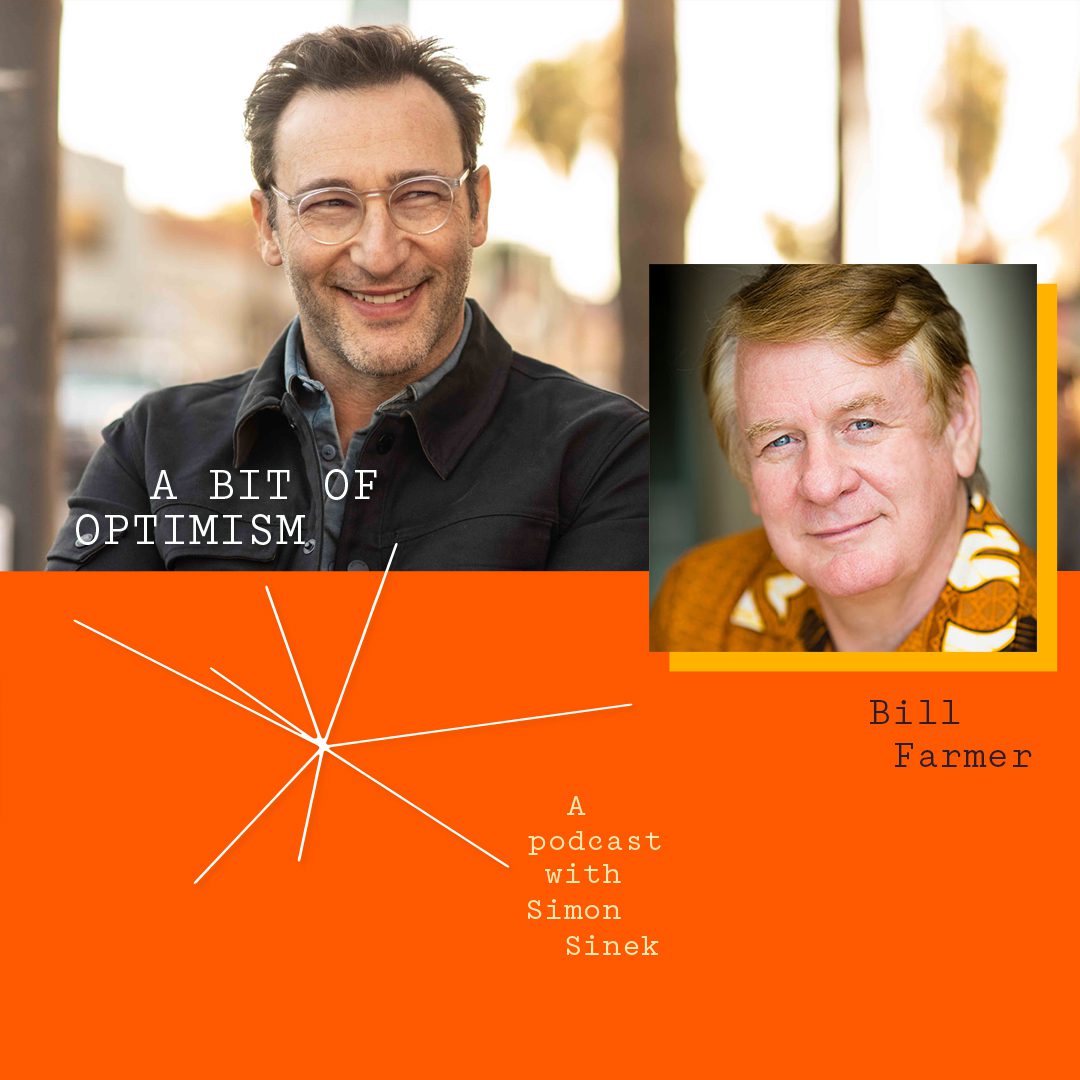
Our guest on the podcast this week lives out that dream and shares the message of optimism in a very unique way.

You may not recognize his name, but you would know his iconic voice anywhere. His name is Bill Farmer and he’s been the voice actor for Goofy (yes, Mickey’s friend) for over 30 years. Bill shares his journey from being a struggling comedian to becoming one of the most iconic voice actors in the industry. He talks about his early days, his love for performing, and how he landed his dream job with Disney. The episode is full of laughter, fun anecdotes and impressions, and insights into the world of voice acting.

The podcast episode is not just about Bill’s journey but also about the joy that Goofy has brought to people’s lives over the years. Simon and Bill reminisce about their childhood memories of watching cartoons and how these characters continue to resonate with people of all ages.

And the message of this episode has resonated with you all, too, because Goofy and his values have stayed with you.

I listened to this episode with my 8 year old on the way to basketball practice. He wanted to listen to it again on the way to school this morning….

This message was so perfectly timed for me. I'm tackling some tasks I've been procrastinating starting or trying to finish (again) for a while now. I was a huge fan of mickey growing up and got to meet some of the characters once at a small event. Goofy was the one who shook my hand and danced with me. I never forgot that. How apt I hear this interview at this moment...Thank you.😍​

This was my favorite episode to listen to - I laughed out loud SO many times 😍 What a gift!!!!!

Wow, what an amazing post! Bill Farmer is truly a Disney Legend and has brought so much joy to countless people through his incredible voice work. It's inspiring to hear how he views his work as an act of service and how he has dedicated his career to bringing happiness to others. I can't wait to listen to the full conversation on A Bit of Optimism. Thank you for sharing!

You see, the thing about Bill is that he doesn’t take any of the credit for the impact of his characters. He’s remained humble and encouraged in the work he does because he is simply their voice. 

I enjoy entertaining, and I'm just so glad that people care about what we're doing. And as Wayne, all one who did Mickey for the first 25 years until he passed away in 2009, always said, you know, we're just carrying the torch for a little while with these characters. They'll be around here a lot longer than we will and have been around a lot longer before. So we're just trying to do a good job in the time we've got with it and get to hang around with some very interesting characters in the studio. And I'm just so glad that people enjoy that.

If you have a story about someone you know inspiring people to help others or how Simon’s work has inspired you, send it to us at [email protected], and we might share it here!

Going the Distance—Literally

How far would you go for the people you love? To the ends of the earth? To Mars?

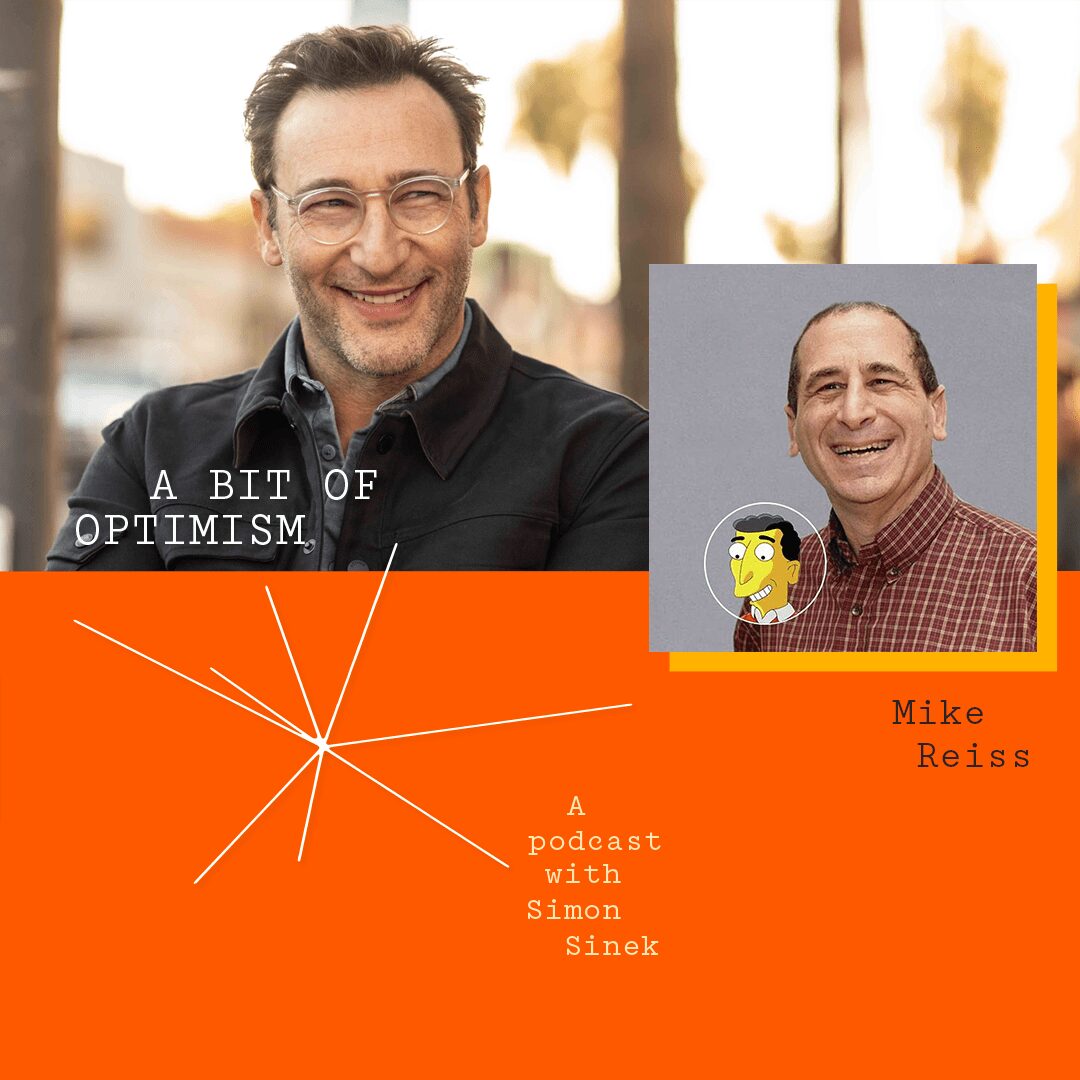
This week on A Bit of Optimism, Simon sits down with Mike Reiss, the prolific comedy writer and producer best known for his work on The Simpsons. Reiss shares hilarious and wild stories from his travels, including the time he spent in North Korea and Antaractica. Reiss’ tales remind listeners that even the most unexpected and bizarre experiences can lead to great memories and laughter.

Later, they (of course!) discuss Mike’s established career as a writer and story consultant for a variety of projects, most notably The Simpsons. And Simon even finds out the answer to the age-old question: who are the Minions (yes, those Minions) named after? 

“My wife and I have been to 134 countries and then things like that. Like we've been to the North Pole, which is not a country, and we've been to Easter Island, which the thing is 3000 miles in the middle of the sea, but it's considered Chile. So those don't count as countries. And we climbed Mount Kilimanjaro. And I think what's significant about all these things is you don't want to do any of them. I don't enjoy any of this stuff. None of it's my idea. I have a wife who loves to travel and I love my wife. And if I want to spend a vacation with her, I have to do it in North Korea or Libya or someplace like that.”

"But I mean, this is the ultimate expression of love."

"I think so."

If you have a story about someone you know inspiring people to help others or how Simon’s work has inspired you, send it to us at [email protected], and we might share it here!

Instructor Spotlight: Jerry ThompSon III

We here at The Optimism Company know that together is better, and we wouldn’t be able to do what we do without our amazing instructors.

Want to get to know us a little better? Meet Jerry the Third, one of Simon’s Master Trainers!

Simon’s Master Trainers are instructors who specialize in presenting and teaching Simon’s content: Check out our live online classes like Start with WHY, Leaders Eat Last, Leading with an Infinite Mindset, and more. Or, to book them as a speaker for your next event, contact our Experiences Team.

Jerry Thompson III (aka Jerry the Third) is an adventurer who has spent the last ten years exploring various fields, including art, culture, and business. He has developed a unique set of skills and perspectives that allow him to solve challenges and help others find fulfillment. As one of Simon Sinek’s Master Trainers, he is a speaker and facilitator who is excellent at captivating audiences and presenting complex subjects in a relatable manner. He believes that adventure can lead to significant personal transformations and encourages his listeners to take their next step towards a more inspired tomorrow.

Read on to learn more about Jerry!

How are you today?

Pretty well, thanks for asking!

What was it that moved you to your line of work?

I like helping people move from where they are to where they want to be. Training is just another way to participate in that transformation 🙂

Tell us about the classes you offer with us, please.

All of them! My favourite however, is our SWW series. It’s such a treat to see a room of literal strangers help each other find their WHYs. Some people don’t realize the experience they signed up for, but by the end of class the smiles and kind words they share about how their classmates helped them let me know they got more than they imagined they would.

What is one thing from your teachings that you wish everybody would learn/know?

Nothing changes until you put these ideas into practice. Start where you are, but start!

What is your favorite saying/bit of advice?

“A ship in harbor is safe, but that is not what ships are built for.”

What is something that will always brighten your day?

If I get the chance to cheer-on one of my friends, it’s the best. It’s hard to feel down when you interact with someone striving for their next level. That’s the sort of energy that I like - my friends are super inspiring.

How are you today?

Pretty well, thanks for asking!

What was it that moved you to your line of work?

I like helping people move from where they are to where they want to be. Training is just another way to participate in that transformation 🙂

Tell us about the classes you offer with us, please.

All of them! My favourite however, is our SWW [Start with WHY] series. It’s such a treat to see a room of literal strangers help each other find their WHYs. Some people don’t realize the experience they signed up for, but by the end of class the smiles and kind words they share about how their classmates helped them let me know they got more than they imagined they would.

What is one thing from your teachings that you wish everybody would learn/know?

Nothing changes until you put these ideas into practice. Start where you are, but start!

What is your favorite saying/bit of advice?

A ship in harbor is safe, but that is not what ships are built for.”

What is something that will always brighten your day?

If I get the chance to cheer-on one of my friends, it’s the best. It’s hard to feel down when you interact with someone striving for their next level. That’s the sort of energy that I like—my friends are super inspiring.

If you have a story about someone you know inspiring people to help others or how Simon’s work has inspired you, send it to us at [email protected], and we might share it here!

Friendship in Business

How do we maintain meaningful relationships that aren’t transactional in a society built on transactions? 

This week on A Bit of Optimism, Simon is joined by his longtime friend, author, entrepreneur, and marketing expert Seth Godin. Over the course of their conversation, they go down the rabbit hole of discussing the impacts of today’s marketing trends on our personal relationships. 

“If you have two friends and you're moving and one friend says, I'll give you $5,000 towards the moving van, super generous. And the other friend says, I'll come to your house, I'll fill up the boxes with you, I'll spend all day with you, I'll load the van with you. I'll drive with you to the new house and I'll help you unload all the boxes. And six months later, both of them ask for a favor. On the same day, you're going to go with the one who gave their non-redeemable time and energy because it's actually worth more than any amount of money.”

Simon and Seth discuss the nature of friendships and whether they are transactional. Simon argues that true friendships are not—people don’t keep score of what they have done for each other. Seth adds that the most important relationships are fueled by a liminal space of trust and possibility. They agree that our time, energy, and emotions are valuable because they are finite. In the same way, we can seek out projects that evoke deep emotion and are not transactional. The ingredient of love comes with sweat, energy, rigor, sacrifice, pain, laughter, and inspiration. 

It’s important to “get real” in our friendships, meaning both people should be clear about what kind of change they seek to make and what kind of interactions they want to have. For Simon and Seth, their friendship has been built on honesty and selflessness in their actions, which makes each other feel appreciated and supported. Plus, they trade and admire unadulterated and honest input, even when they don’t necessarily agree.

For more from Simon and Seth Godin, check out this episode of A Bit of Optimism:

If you have a story about someone you know inspiring people to help others or how Simon’s work has inspired you, send it to us at [email protected], and we might share it here!

The Help Others Industry

There’s an entire section in the bookshop called Self-Help, but there is no section called Help Others.

We need to build the Help Others Industry.

Let’s build it together!

We seem to be pretty obsessed with ourselves. We are looking for love, the perfect job. We want to get into shape and look after our mental health. We are meditating, doing yoga, hiring trainers, reading books, taking classes…anything so we can be the best versions of ourselves.

But there’s a problem. 

Human beings are social animals. We aren’t like great white sharks who roam the oceans alone. Animals like that should be the primary targets for the self-help industry. We, in contrast, have friends, girlfriends, boyfriends, and spouses. We work in teams and live in communities. We can only succeed, in EVERY aspect of our lives when someone else is there to help us. But our society doesn’t really reward helping others. Almost all the incentives in our companies are based on individual performance. It’s like we forgot that our success is almost always dependent on the support, help, and advice of at least one other person in our lives. Always.

We are so focused on advancing ourselves we aren’t building the skills to help others or how to ask others to help us.

There is a great irony; If we actually help others overcome their challenges, if we help others find what they are looking for, especially when their challenges and ambitions are the same as ours, we are actually more likely to find what we are looking for.

This is why I founded The Optimism Company – to teach the human skills we need to do better and help each other. And one of the ways we are doing it is with this new blog.

This is a space for stories of all kinds. Every week, we will share content meant to spark inspiration, encourage collaboration and, of course, spread optimism. You will get ideas and tools to help hone your human skills to help others and better ask others for help.

And if you have a story about someone you know inspiring people to help others or how my work has inspired you, send it to us at [email protected] and we might share it here!

Until then, take care of yourself and take care of others.

SimonSignature

Join the
Help Others Industry

If there’s one thing we know, it is that the best things in life are shared with others. If our message has inspired you and you want to follow along on our journey to build the Help Others Industry, we’d love for you to sign up for our mailing list for inspiration and updates on new classes, exclusive content, and more:
Curiosity is essential
                for progress.
SimonSignature

We fully agree, so we like to reward curiosity.
Use code GETCURIOUS for 20% off your next purchase.

A spark is something quite small and, by itself, not very powerful. But a spark has the ability to ignite. An idea is like a spark; alone it is just a set of words, but it too can ignite. A great idea can inspire others to dream bigger. Let us all work together to ignite something greater than ourselves.

Let us all be a Spark of Optimism.